Tools
Structural analysis
Voxel finite-element tools that estimate whether a print will hold up: under its own weight, standing or held, with stress heatmaps and break-risk points. One more turns a texture into relief.
Each runs as {"recipe": "tool", "tool": "structural.<name>", "params": {…}} and computes exactly one analysis. The numbers are in job.result.result; meshes come back as OBJ artifacts (heatmap, result_obj, result_parts_obj_zip).
Common parameters#
Every structural tool except structural.relief takes these. The model is voxelized, given a material, supported and loaded.
up_axis0 | 1 | 2default 1Which axis points up: 0 = X, 1 = Y, 2 = Z.
voxel_size_mmnumberdefault 00–100Voxel size of the analysis grid; 0 chooses it automatically.
support_gap_voxelsintegerdefault 31–100The gap, in voxels, the engine allows when it decides which voxels are supported.
materialpreset | objectdefault "generic"A preset name or your own values; see below. Every result echoes the material used.
target_safety_factornumberdefault 2.01–100The safety factor a part should reach; results report how much of it falls short.
load_gnumberdefault 1.00–1000Gravity multiplier: 1 is the part's own weight, 3 three times it.
Materials#
| preset | E (MPa) | ν | ρ (g/cm³) | Yield (MPa) | Stress metric | Source |
|---|---|---|---|---|---|---|
generic | 2000 | 0.30 | 1.10 | 50 | von_mises | engine default |
pla | 3200 | 0.31 | 1.24 | 50 | von_mises | published, conservative |
formlabs_grey_v5 | 2675 | 0.35 | 1.18 | 62 | max_principal | datasheet |
mimaki_mh100 | 2200 | 0.35 | 1.17 | 45 | max_principal | inferred (ABS-like; Mimaki publishes no mechanical data) |
Or send the values yourself:
{ "youngs_modulus_mpa": 2400, "poisson_ratio": 0.35, "density_g_cm3": 1.2,
"yield_strength_mpa": 40, "stress_metric": "von_mises" }youngs_modulus_mpanumberrequired> 0, ≤ 1,000,000Stiffness.
poisson_rationumberrequired0 to < 0.5Poisson's ratio.
density_g_cm3numberrequired> 0, ≤ 30Density, for the weight.
yield_strength_mpanumberrequired> 0, ≤ 100,000Stress at which the material fails.
stress_metric"von_mises" | "max_principal"default "von_mises"How stress is compared with the yield strength.
Support and load#
structural.heatmap and structural.fragility also take a point support and a point load:
support_fracnumberdefault -1−1 to 1Where the part is held: −1 at its feet (as it stands), 0.5 at the waist.
support_point, support_radius_mm[x, y, z], numberdefault —, 6.0radius 0.5–1000Hold the part at this point instead, over this radius.
load_point, load_radius_mm[x, y, z], numberdefault —, 6.0radius 0.5–1000Apply a force at this point, over this radius.
load_dir[x, y, z]Direction of the force; default straight down (minus the up axis).
load_force_nnumberdefault 10.00–1,000,000The force in newtons.
Every result on this path reports the grid (grid, solid_voxels), the part (volume_mm3, mass_g, center_of_mass_voxel, bounding_box_mm), its islands (num_components, floating_parts, components_voxel) and an overhang summary, beside the tool's own block.
structural.components#
Lists the separate islands of the mesh and can remove the ones you do not want, such as floating specks.
{ "remove": { "max_dim_mm": 2, "logic": "or", "keep_main": true } }weldbooleandefault trueWeld coincident vertices first, so touching triangles count as one island.
weld_mmnumberdefault 0.001> 0, ≤ 10Weld distance.
min_facesintegerdefault 1≥ 1Smallest island reported.
exportbooleandefault falseReturn every island as its own mesh.
removeobjectRemove islands that match; the cleaned mesh is returned. Each criterion is 0 (off) unless set.
remove.max_dim_mmnumberdefault 00–10,000Islands whose largest dimension is at most this.
remove.volume_mm3numberdefault 0≥ 0Islands with at most this volume.
remove.facesintegerdefault 0≥ 0Islands with at most this many faces.
remove.bbox_mm[x, y, z]Islands that fit inside a box of this size.
remove.logic"or" | "and"default "or"Whether an island must match any criterion or all of them.
remove.keep_mainbooleandefault trueNever remove the largest island.
Result: components_mesh with count, reported, exported, welded, total_faces, total_vertices, a list of islands and, with a remove rule, cleanup. The common fields above are not reported by this tool.
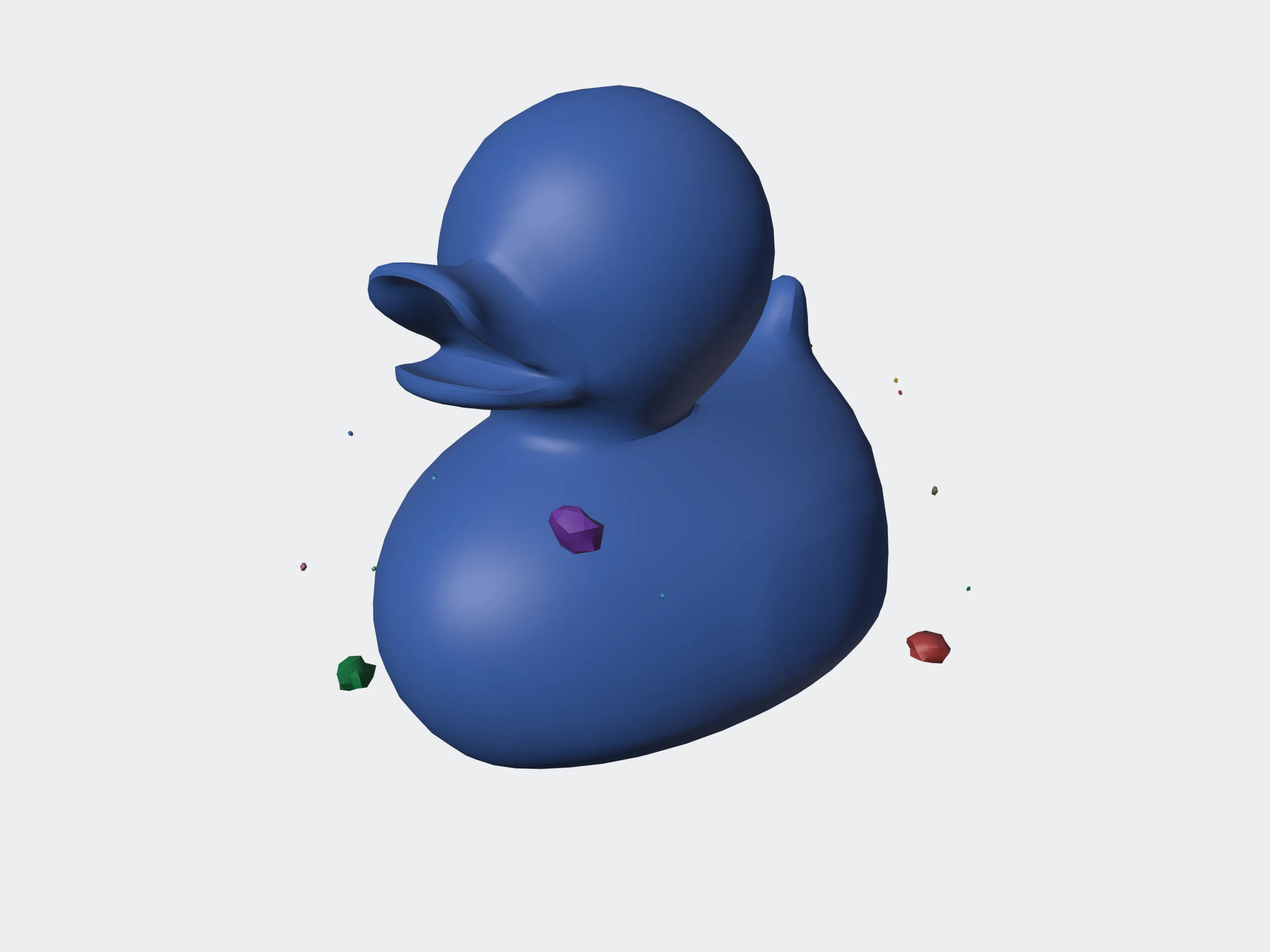 Islands
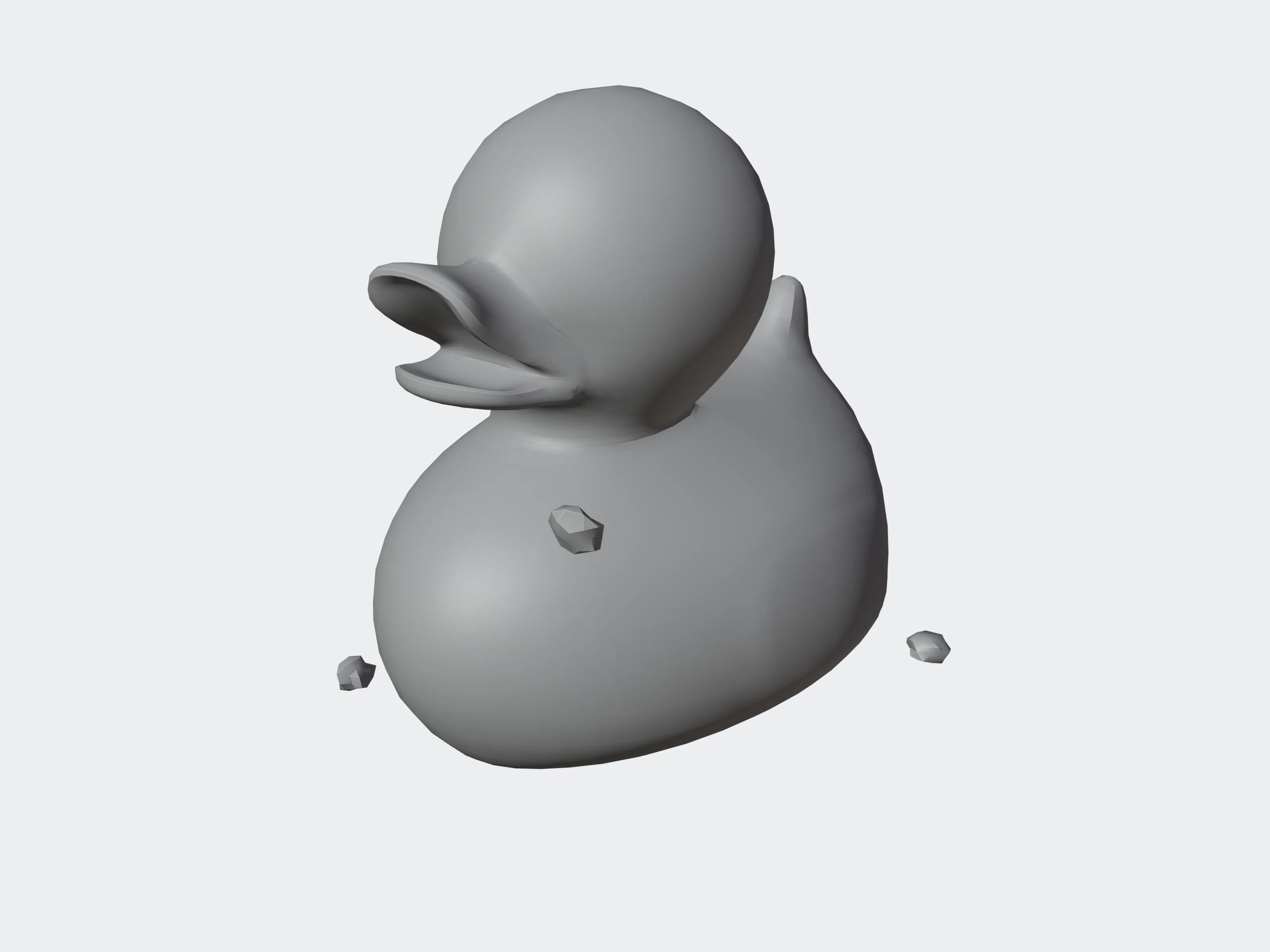 remove max_dim_mm 2
structural.fea#
Solves the voxelized part under gravity (load_g) resting on its floor, and reports displacement and stress. It can also return a thickened or a graded-hollow version.
{ "material": "pla", "grid_cell_budget": 200000, "thicken": { "enabled": true, "max_mm": 1.5 } }grid_cell_budgetintegerdefault 80,0001,000–12,000,000Cap on the total grid cells (not only solid ones). More cells, finer and slower; at 80,000 a solve takes seconds.
solver"amgcg_gpu" | "gpu" | "mgcg" | "amgcg" | "cpu"default "amgcg_gpu"The linear solver. A GPU solver falls back to the CPU on a GPU error, and fea.solver reports the solver requested, not the one that ran.
tolnumberdefault 0.0001> 0, ≤ 1Convergence tolerance.
max_itersintegerdefault 50001–1,000,000Iteration cap.
bandintegerdefault 00–1000The engine's band setting for the solve (0 = off).
fixed_axisintegerdefault -1−1 to 2−1 clamps the floor automatically; 0, 1 or 2 fixes the part on that axis like a cantilever.
nonlinearobject{enabled: false, model: 1, load_steps: 10, newton_iters: 30, newton_tol: 0.0001, gpu: false}: a nonlinear solve in load steps with Newton iterations.
thickenobject{enabled: false, max_mm: 1.0}: also return the part thickened, by at most max_mm, where it is too weak.
hollow_gradedobject{enabled: false, wall_min_mm: 0.6, wall_max_mm: 2.0}: also return the part hollowed with a wall between the two values. No drain holes are added.
Result: fea with structural_guidance, solver, converged, iters, residual, max_disp_mm, max_von_mises_mpa, mean_von_mises_mpa, p95_von_mises_mpa, a note, and blocks for nonlinear, thickening and hollow_graded when enabled. Meshes: the thickened or hollowed part, and the deformed shape.
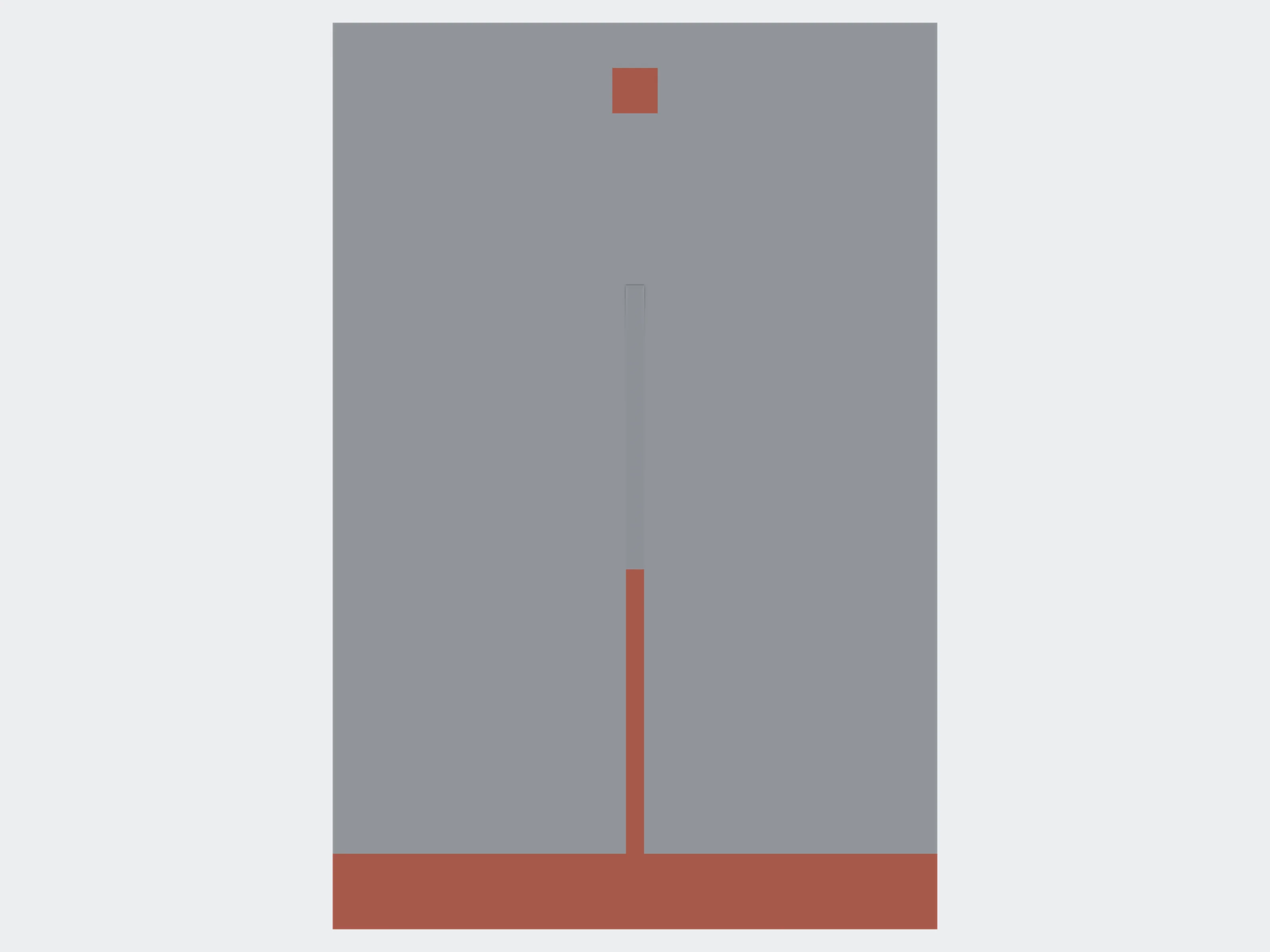 Input
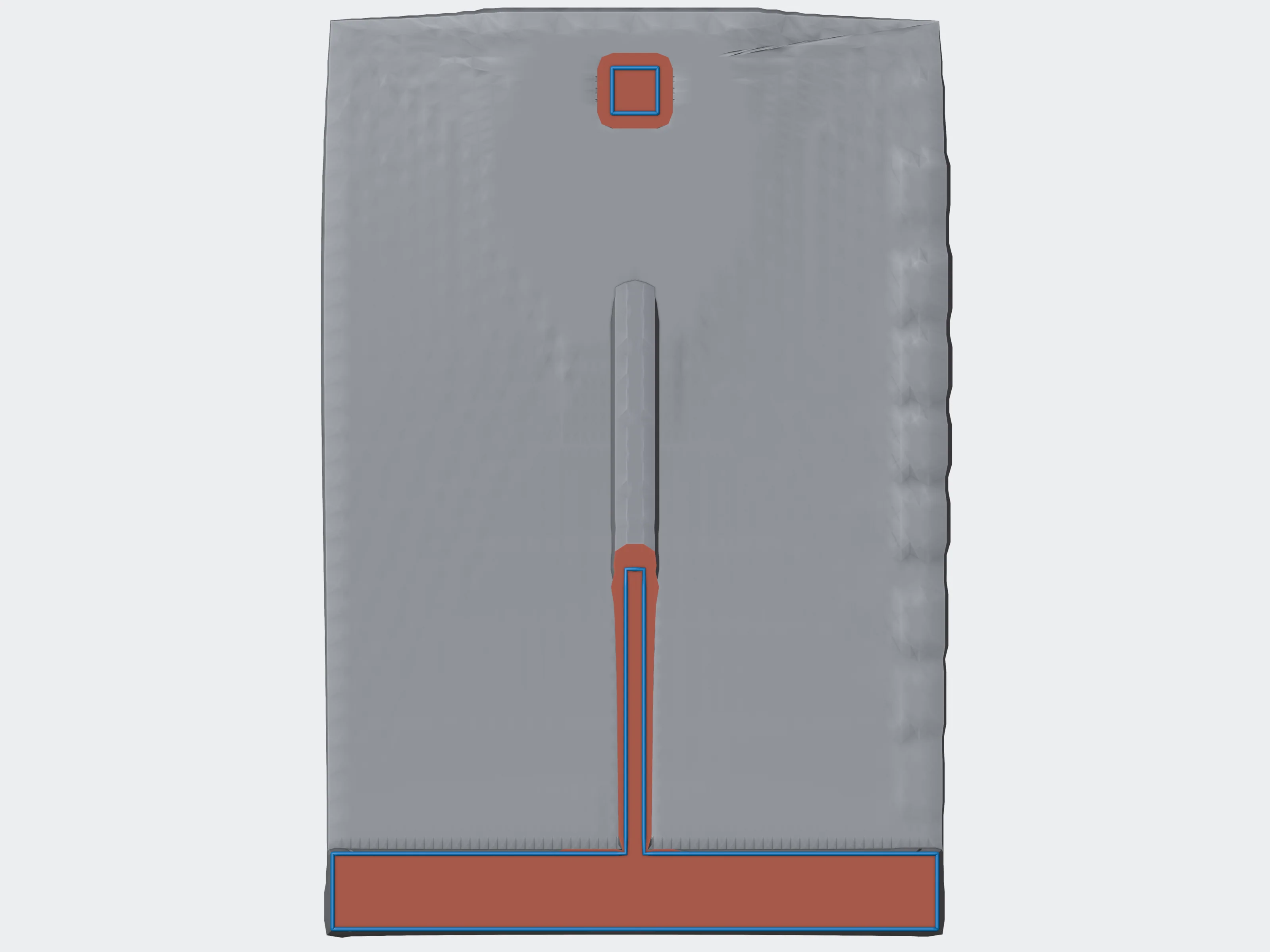 thicken enabled, max 1 mm
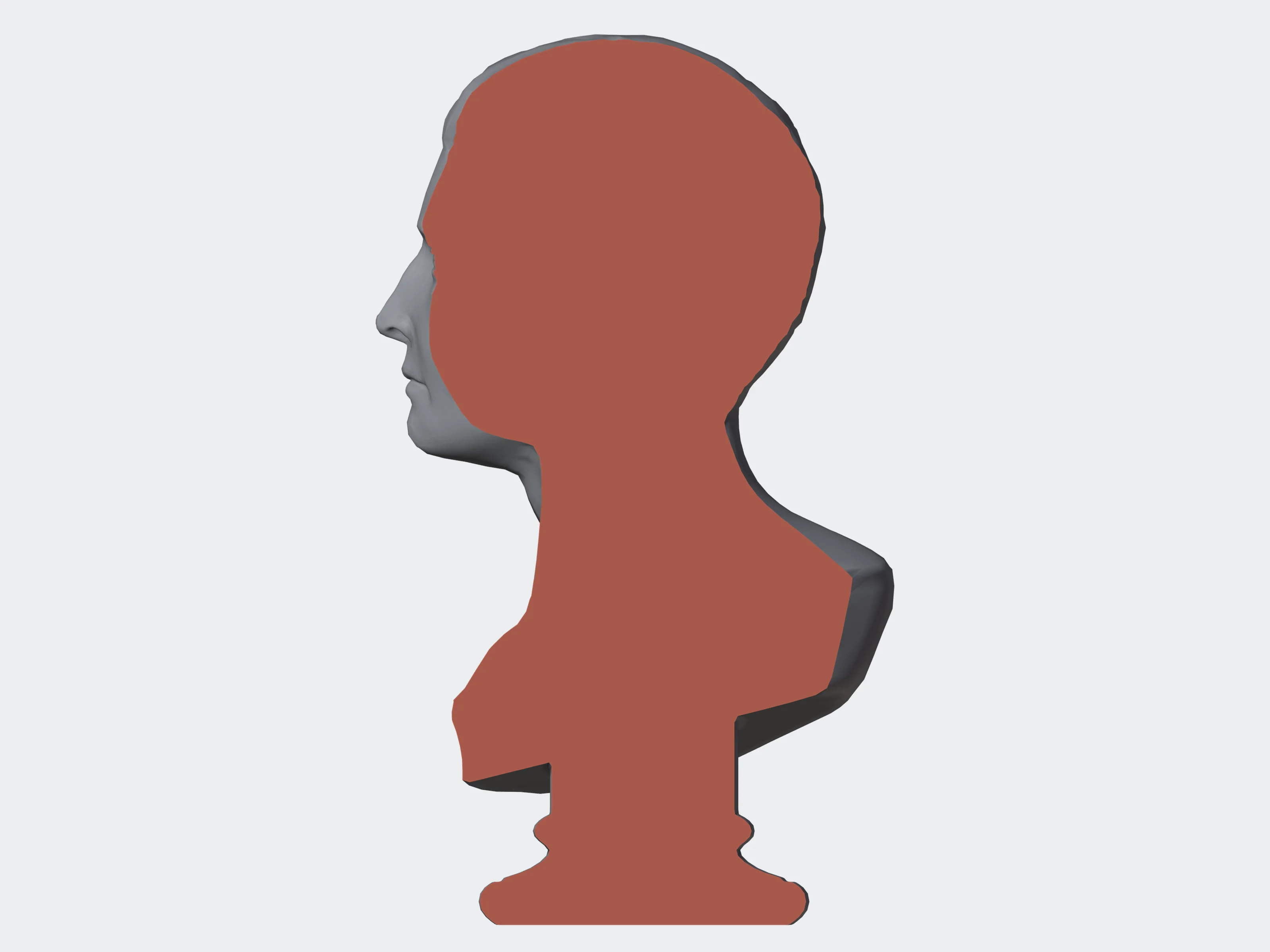 Input (solid)
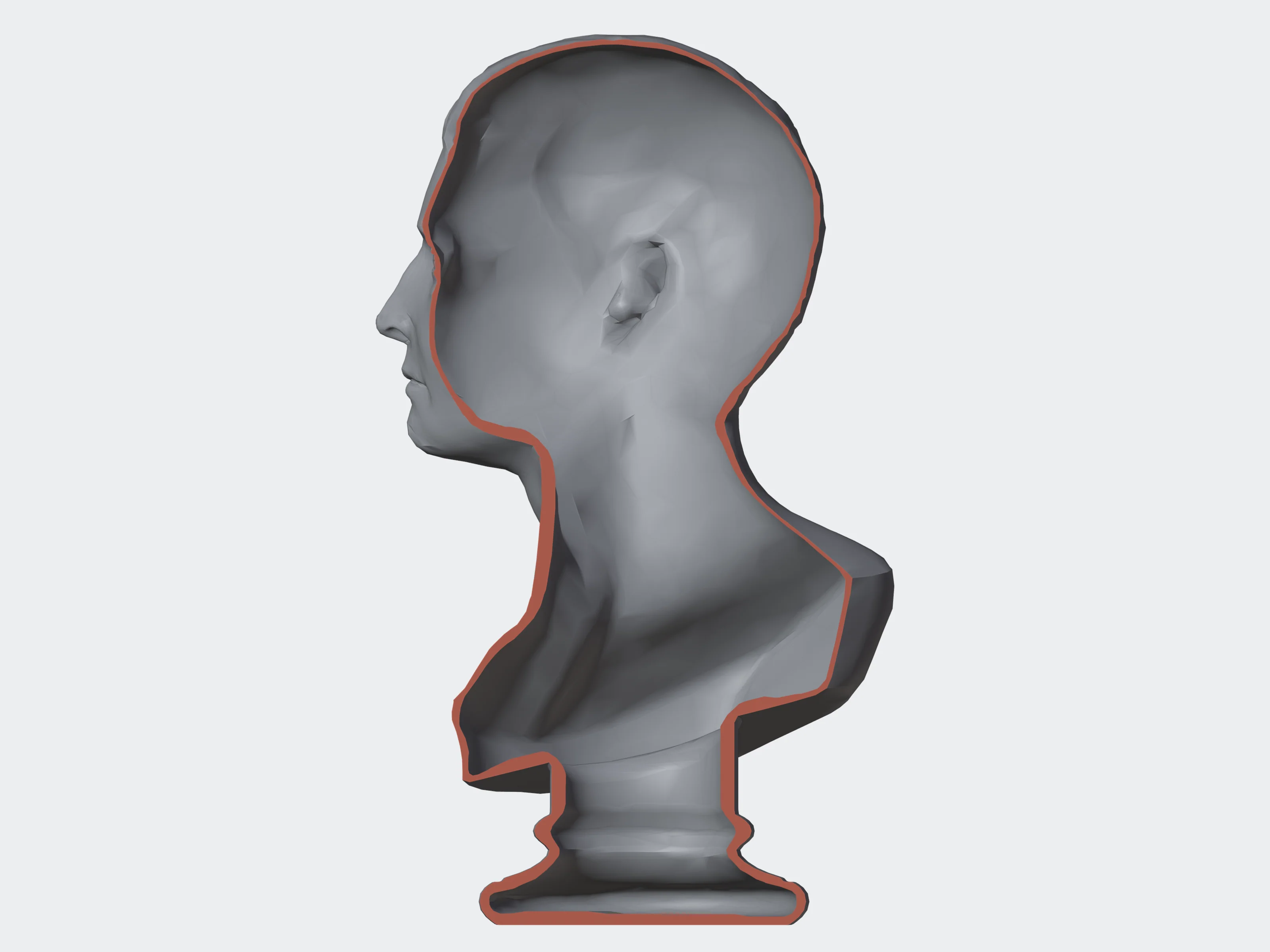 hollow_graded 0.6–2.0 mm
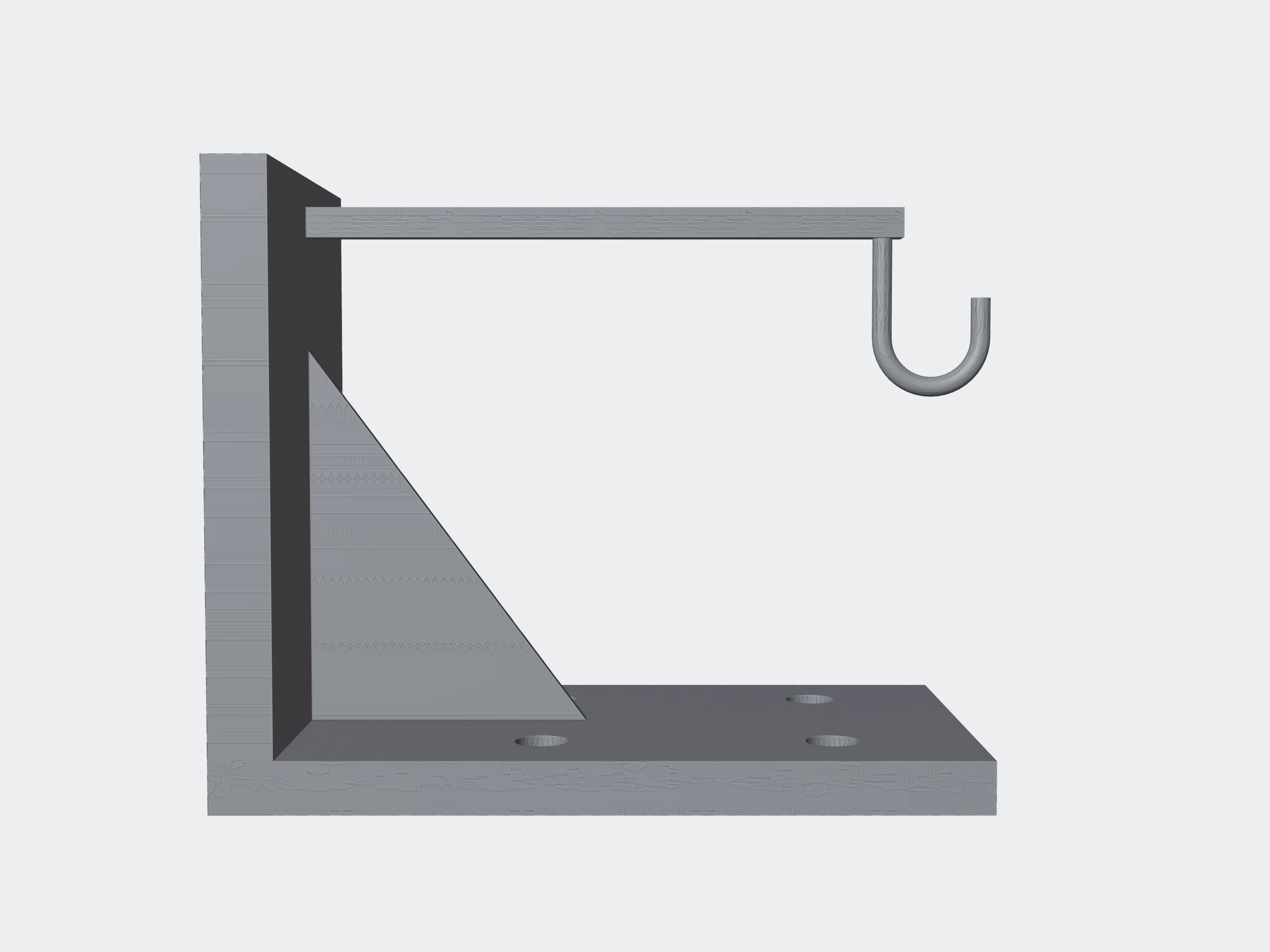 Input
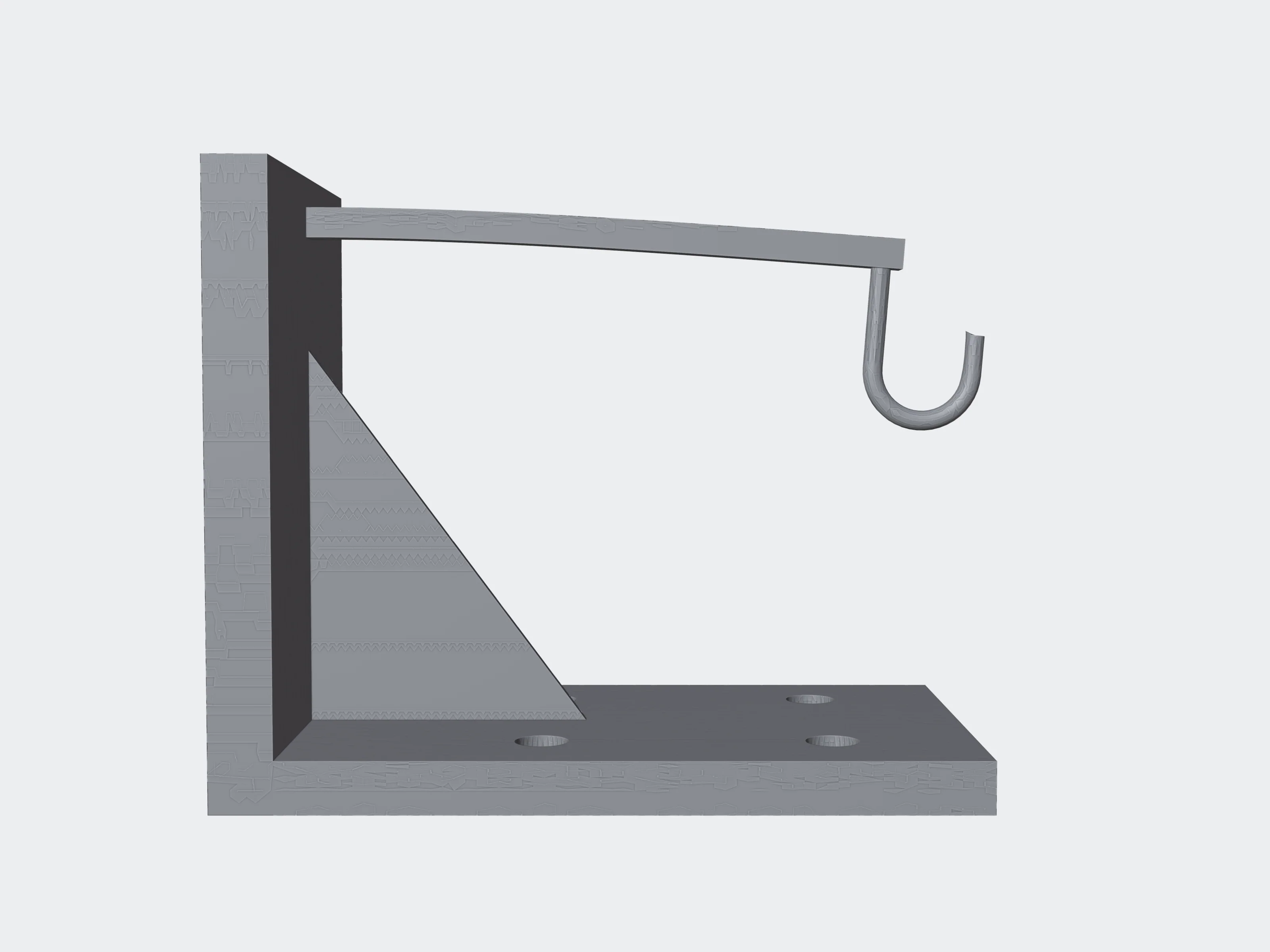 Deformed (movement x 380)
structural.heatmap#
A stress heatmap of the surface for the support and load you describe.
{ "support_frac": 0.5, "normalize": "p99" }normalize"p99" | "max"default "p99"Scales the engine's relative stress map to a high percentile of the surface stress or to its maximum. It does not change the heatmap artifact, which is always coloured against the material's yield stress (color_normalized_by: yield_strength): red means yield, so a safe part reads blue whichever value you send. relative_scale_mpa in the result reports the relative map's scale.
percentilenumberdefault 0.99> 0, ≤ 1The percentile used by p99.
sample_radiusintegerdefault 41–12How many voxels around each surface point are sampled.
Plus the common parameters and support and load. Result: heatmap with max_von_mises_mpa, p95_von_mises_mpa, mean_von_mises_mpa, surface_color_scale_mpa, color_normalized_by, load_g and a note. Artifact: heatmap.
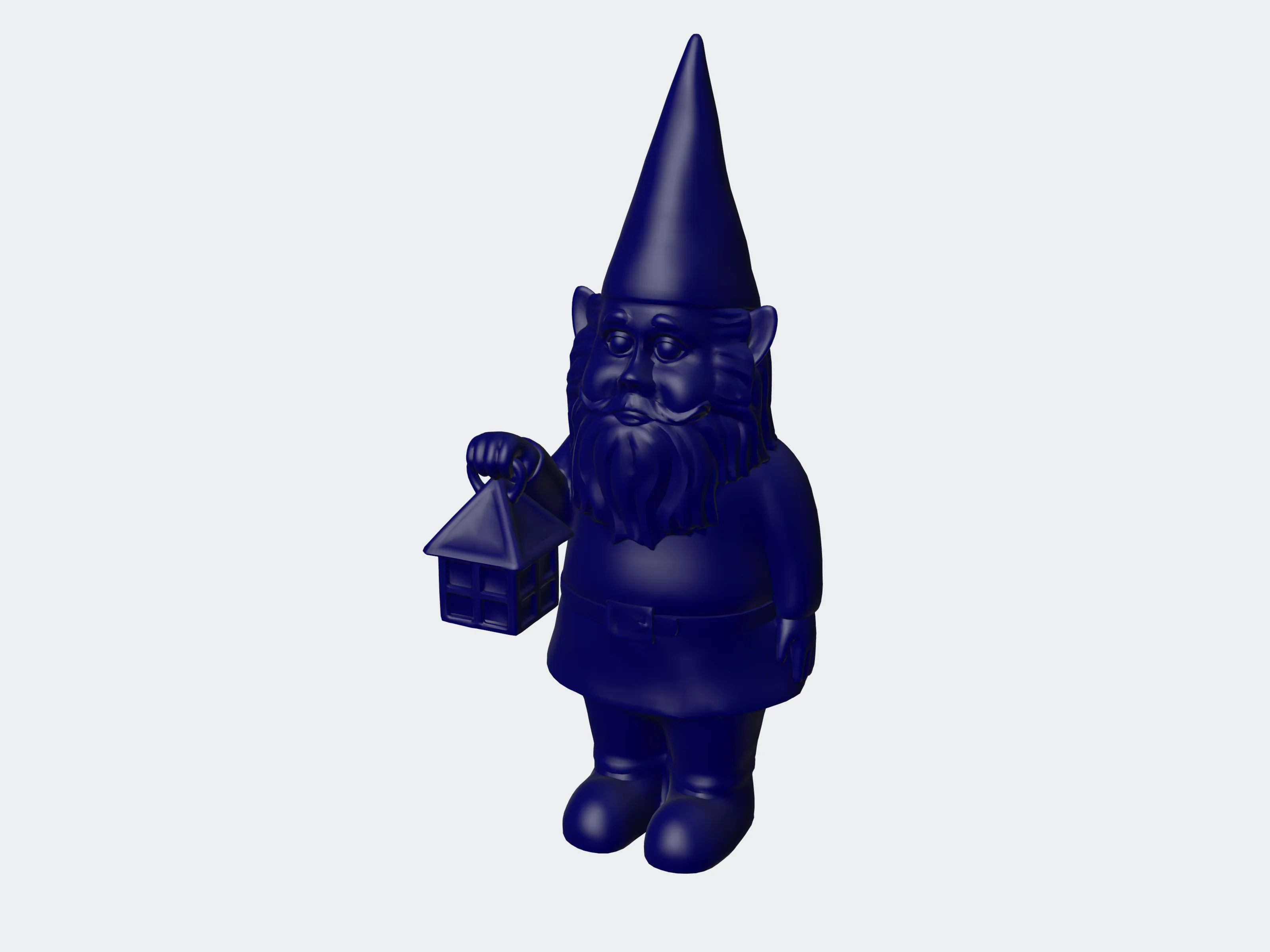 support_frac -1 (feet), yield scale
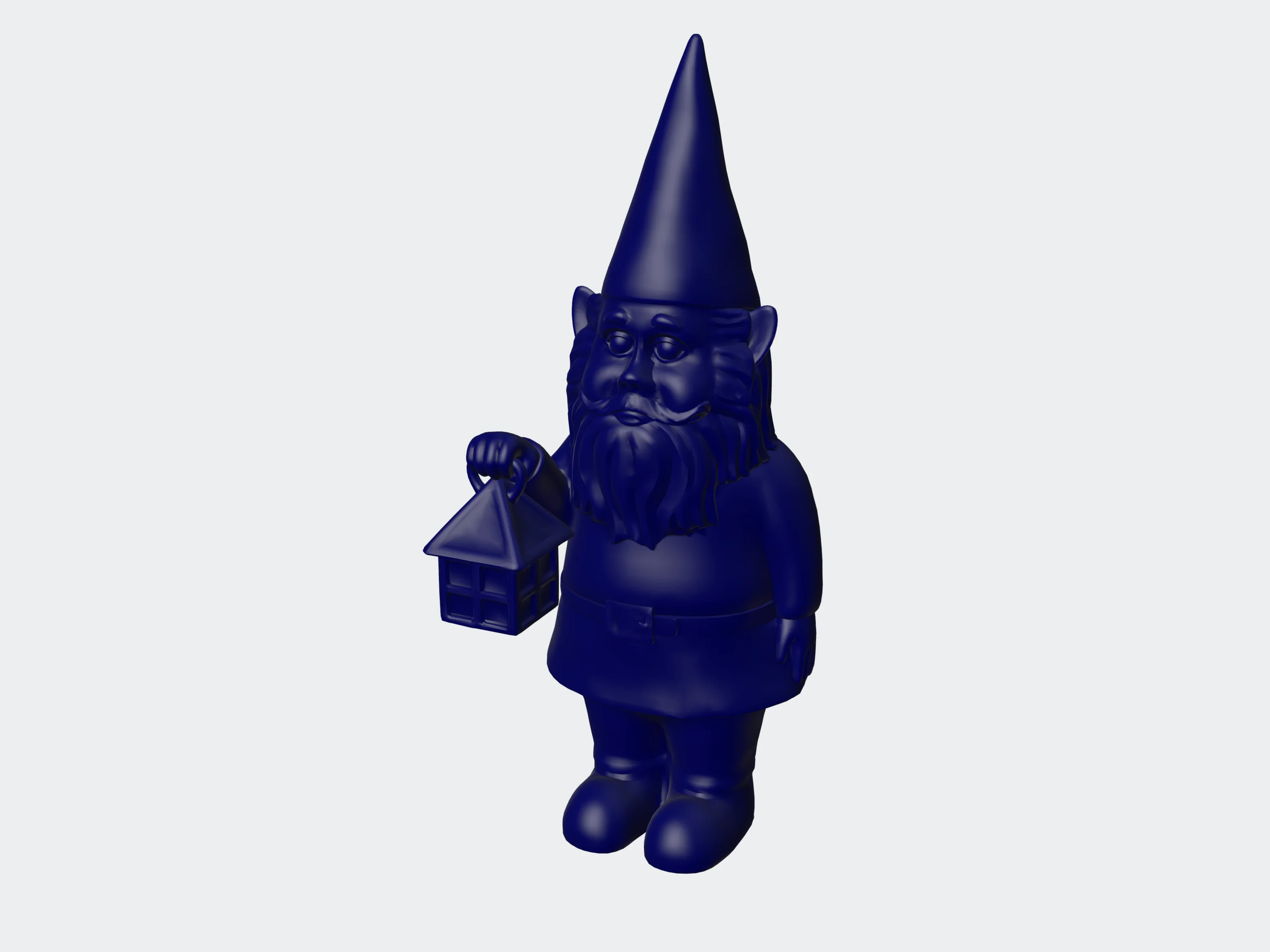 support_frac 0.5 (waist), yield scale
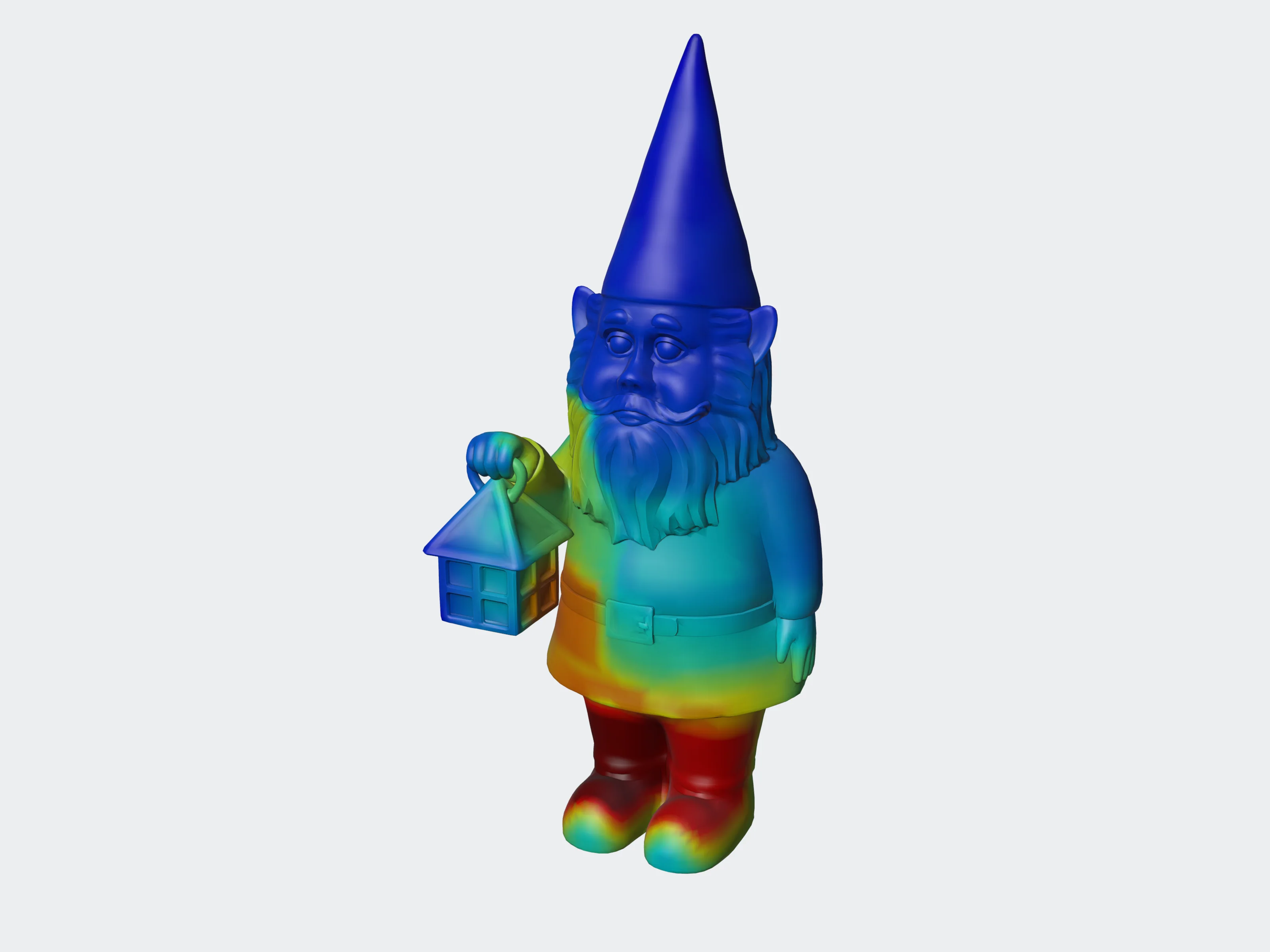 Feet, own scale (from measure_all)
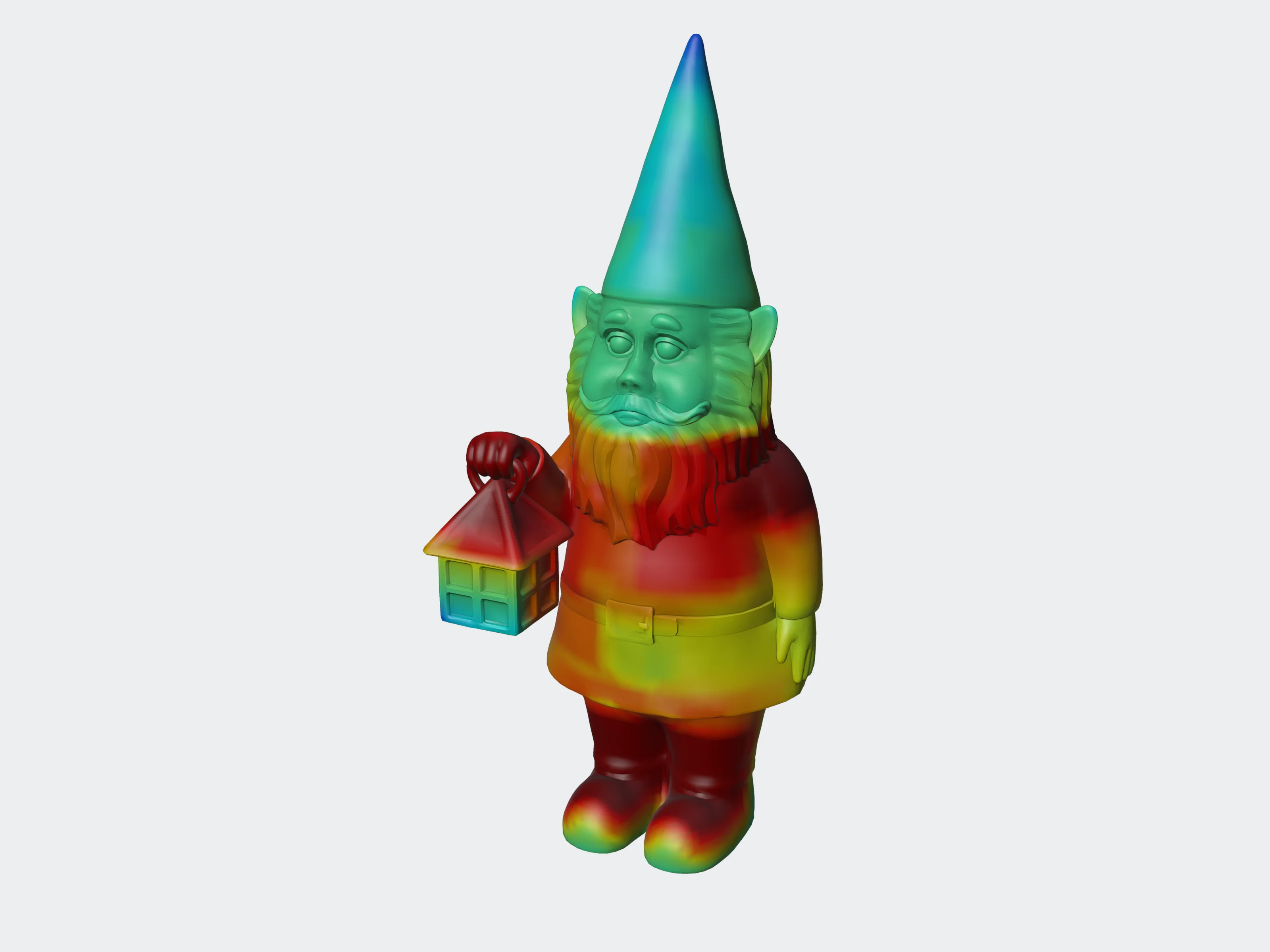 Waist, own scale (from measure_all)
structural.fragility#
The safety factor across the part and the points most likely to break.
sample_radiusintegerdefault 81–20How many voxels around each surface point are sampled.
Plus the common parameters and support and load. Result: fragility with min_safety_factor, max_von_mises_mpa, break_risk_fraction, below_target_fraction, a hotspot, risk_point_count and a verdict in words; the API adds verdict_code: pass, marginal, likely_to_break or unknown. Meshes: the safety-factor heatmap and the risk points.
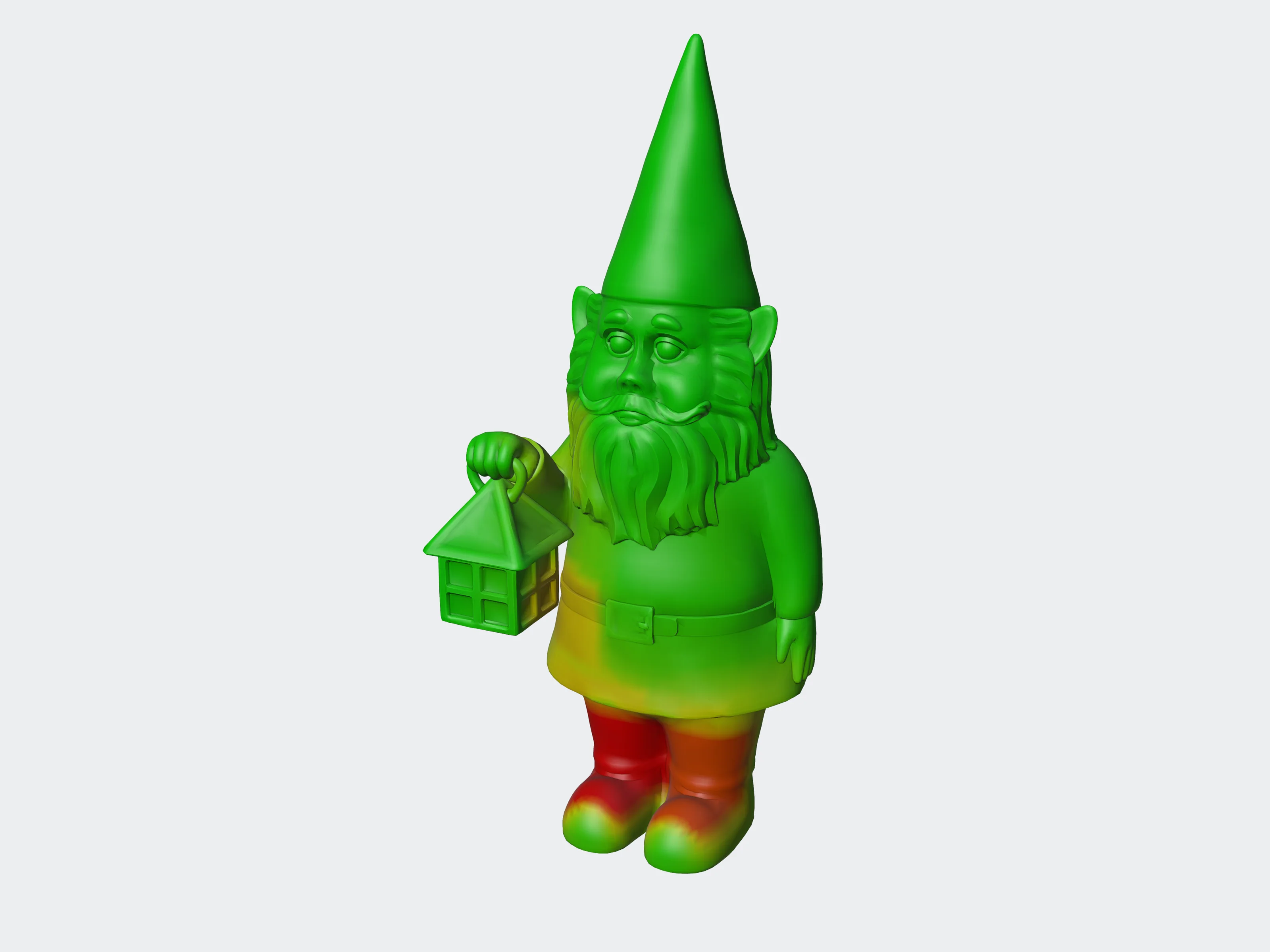 Surface map
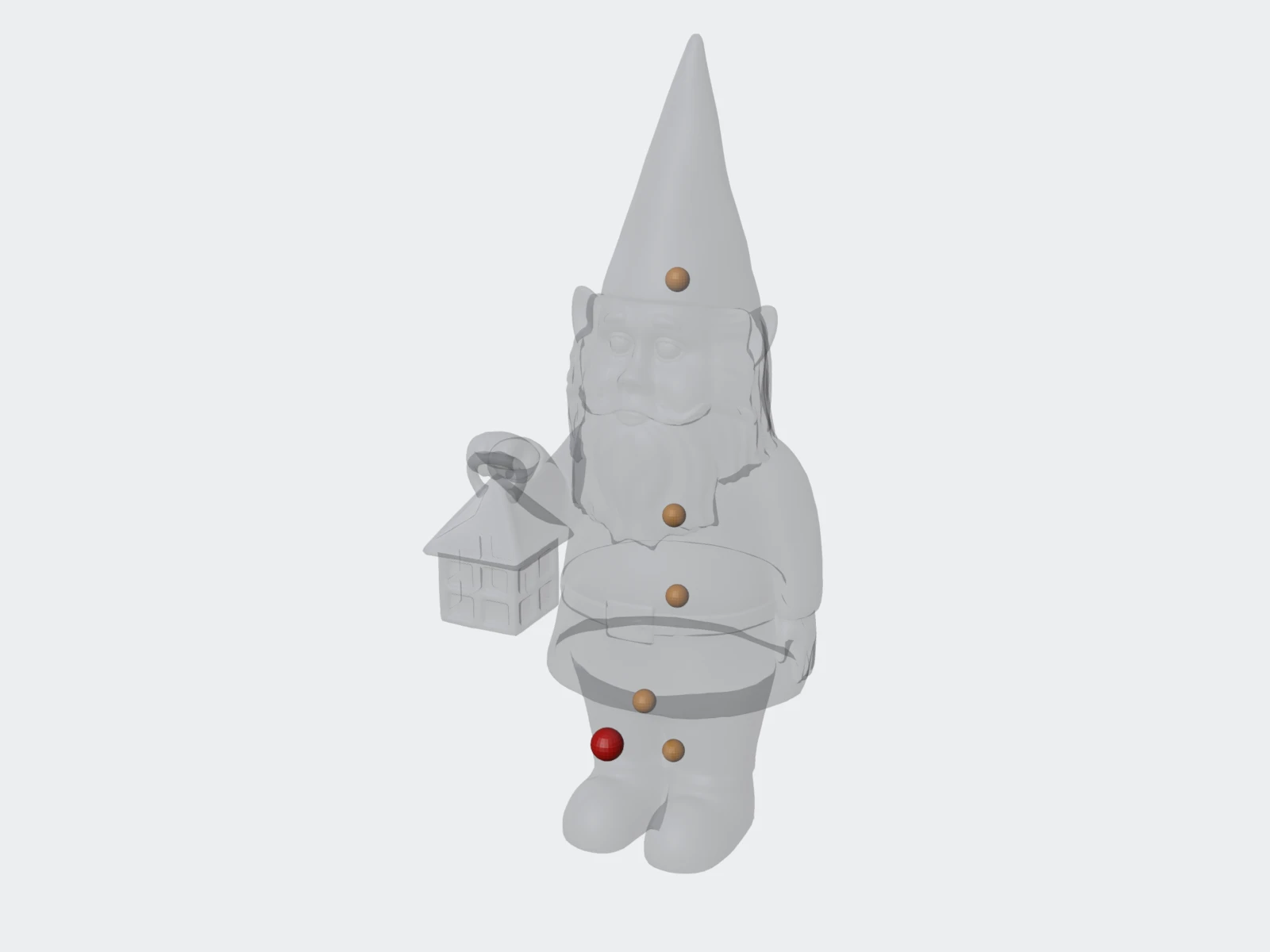 Risk points
structural.measure_all#
Four fixed scenarios in one job: standing_vonmises, standing_maxprincipal, held_waist_vonmises and held_waist_maxprincipal. It runs four solves, so it takes longer than one heatmap.
sample_radiusintegerdefault 41–12How many voxels around each surface point are sampled.
Plus the common parameters. Result: measure_all.scenarios, one entry per scenario with scenario, metric, support, min_safety_factor, max_stress_mpa, break_risk_fraction, below_target_fraction, hotspot_mm and verdict. One heatmap per scenario.
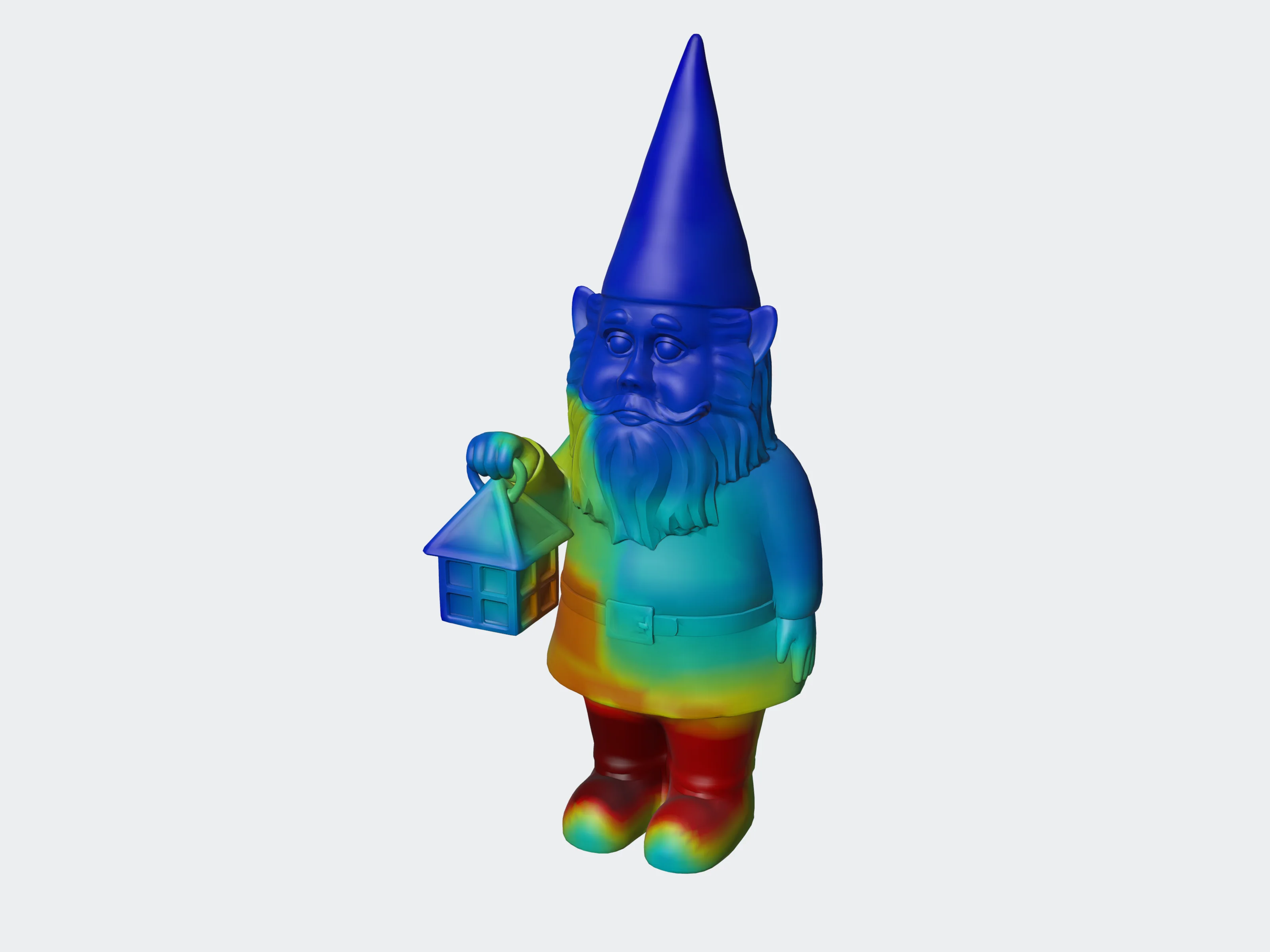 standing, von Mises
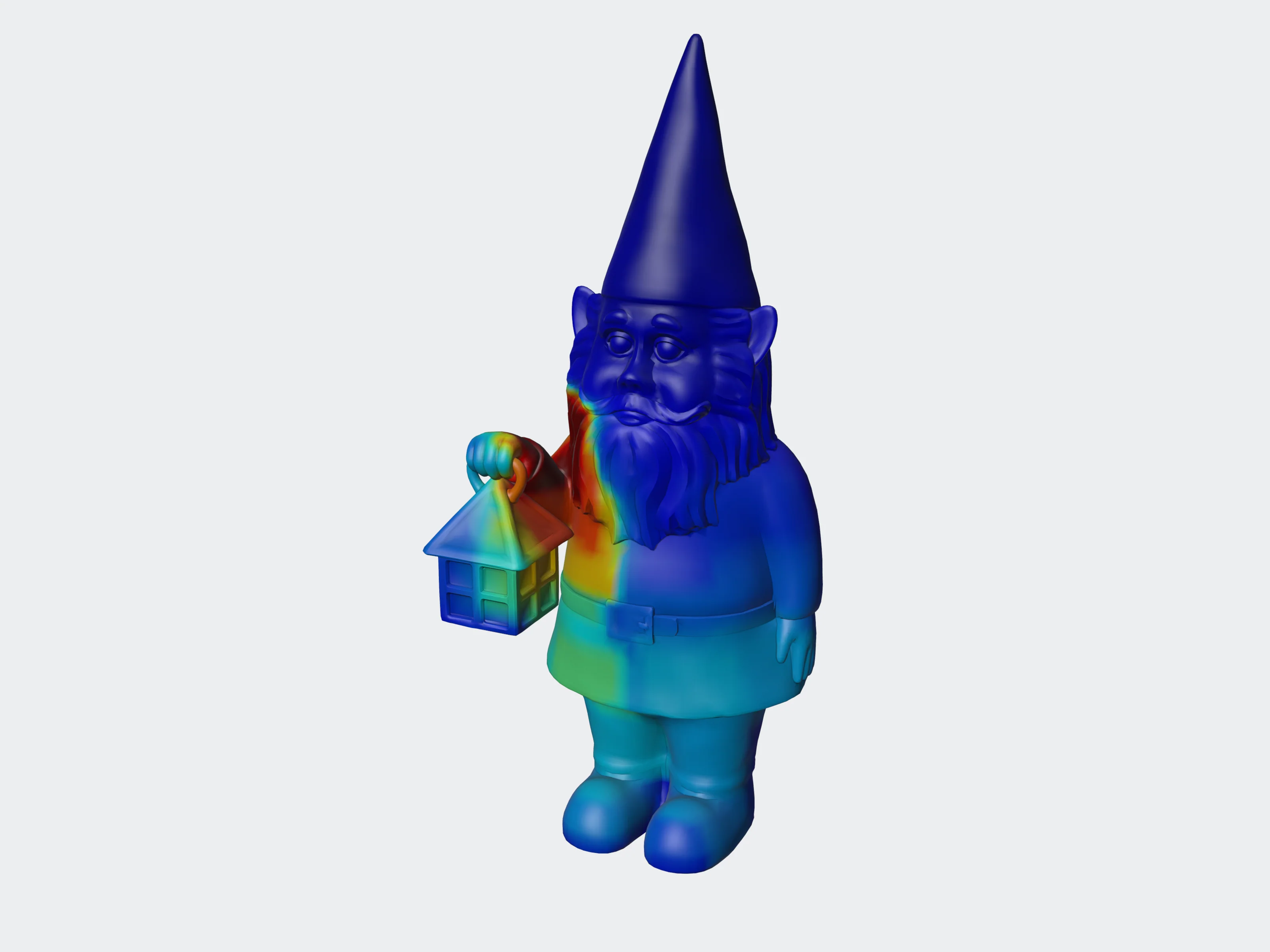 standing, max principal
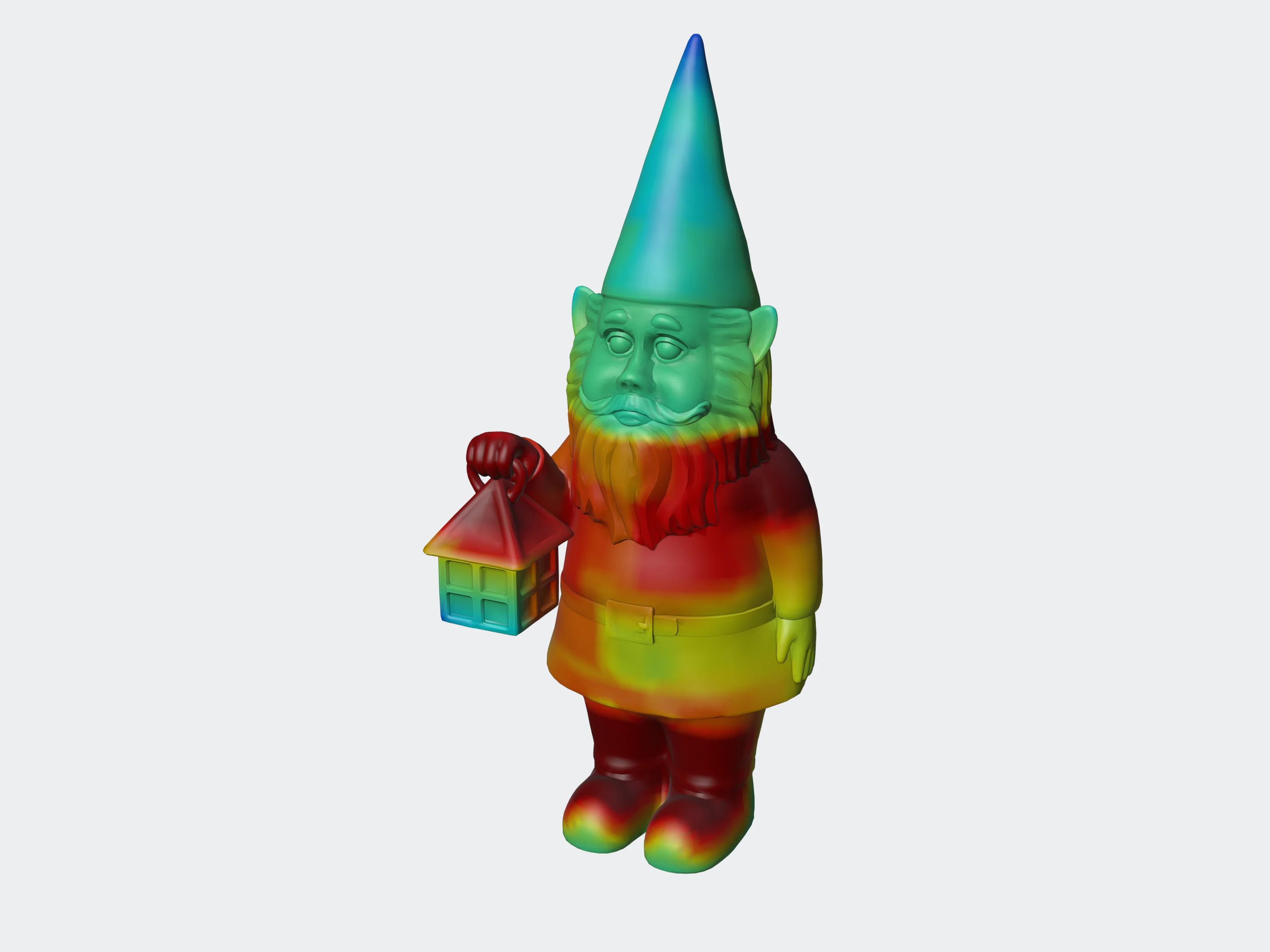 held at waist, von Mises
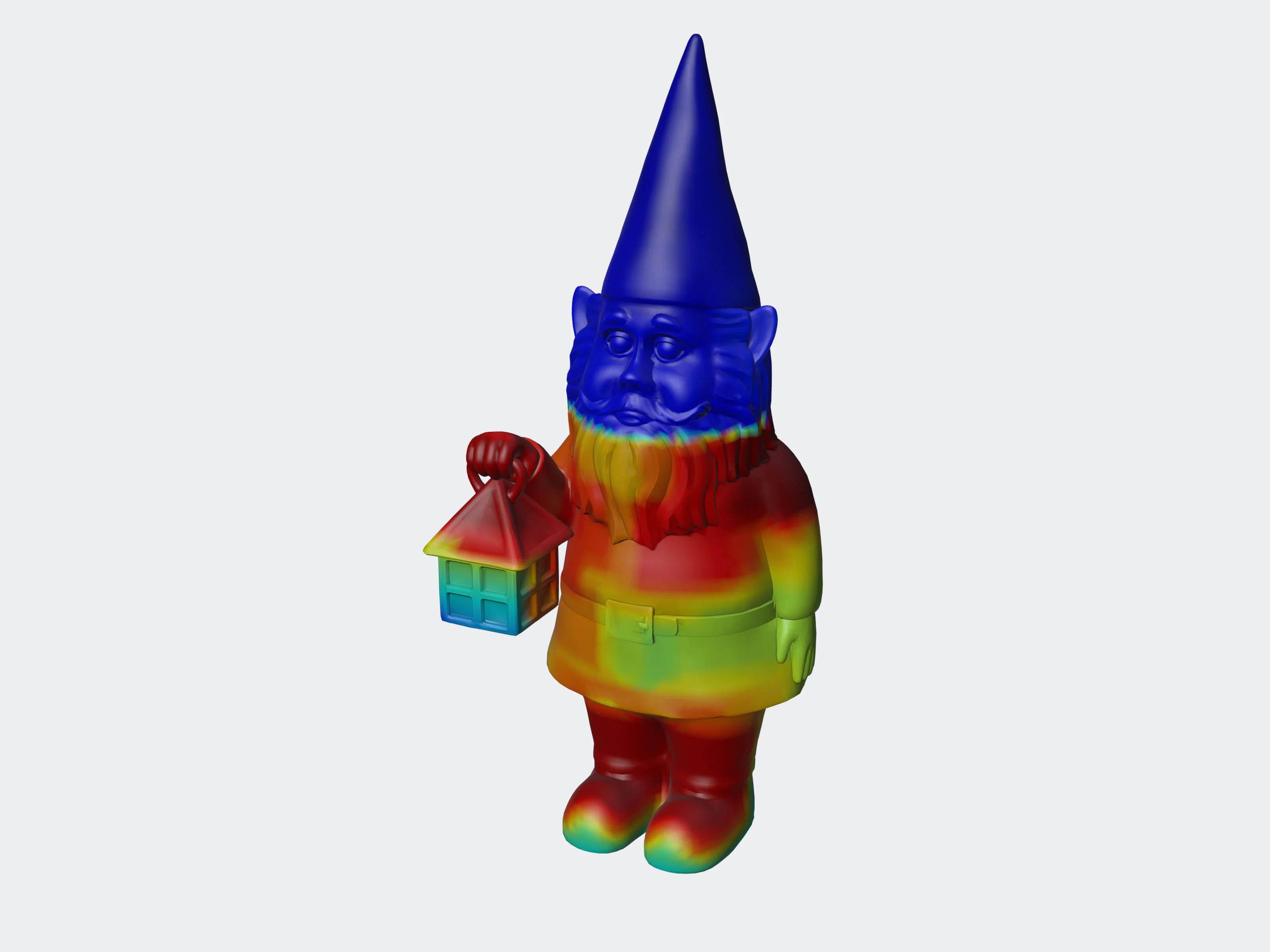 held at waist, max principal
structural.relief#
Turns the model's own texture into real relief: the surface is subdivided, displaced by a height derived from the texture, then repaired into a closed solid. It takes up_axis but none of the other common parameters.
{ "mode": "emboss", "amount_mm": 1.5 }mode"emboss" | "deboss" | "signed"default "emboss"emboss pushes the surface out by the relief height, deboss presses it in, signed does both around the middle of the height range.
amount_mmnumberdefault 1.0> 0, ≤ 100The largest displacement.
min_feature_mmnumberdefault 0.5> 0, ≤ 100The wall left under a deboss; deeper dents are clamped (counted in deboss_clamped).
input_is_heightbooleandefault falseUse the texture's grey levels as the height directly. Off, the engine derives a relief from the image with strength and compress.
strengthnumberdefault 3.0> 0, ≤ 100How steep the image's detail is made before the height is built. The result is rescaled to amount_mm, so this changes the relief's character, not its depth.
compressnumberdefault 6.0> 0, ≤ 100Bas-relief compression: flattens large height differences while keeping detail.
up_onlybooleandefault falseDisplace only surfaces facing up (along up_axis).
max_edge_mmnumberdefault 00–100Subdivide until edges are at most this long before displacing; 0 chooses automatically.
fixbooleandefault trueRepair the displaced surface into a closed solid.
fix_resolutionintegerdefault 4,000,000100,000–100,000,000Grid cells of that repair.
up_axis0 | 1 | 2default 1Which axis points up.
Result: relief_engrave with vertices, mode, amount_mm, min_feature_mm, deboss_clamped, max_applied_mm, subdiv_max_edge_mm and grid_voxel_mm. Meshes: the repaired relief and the raw displaced surface.
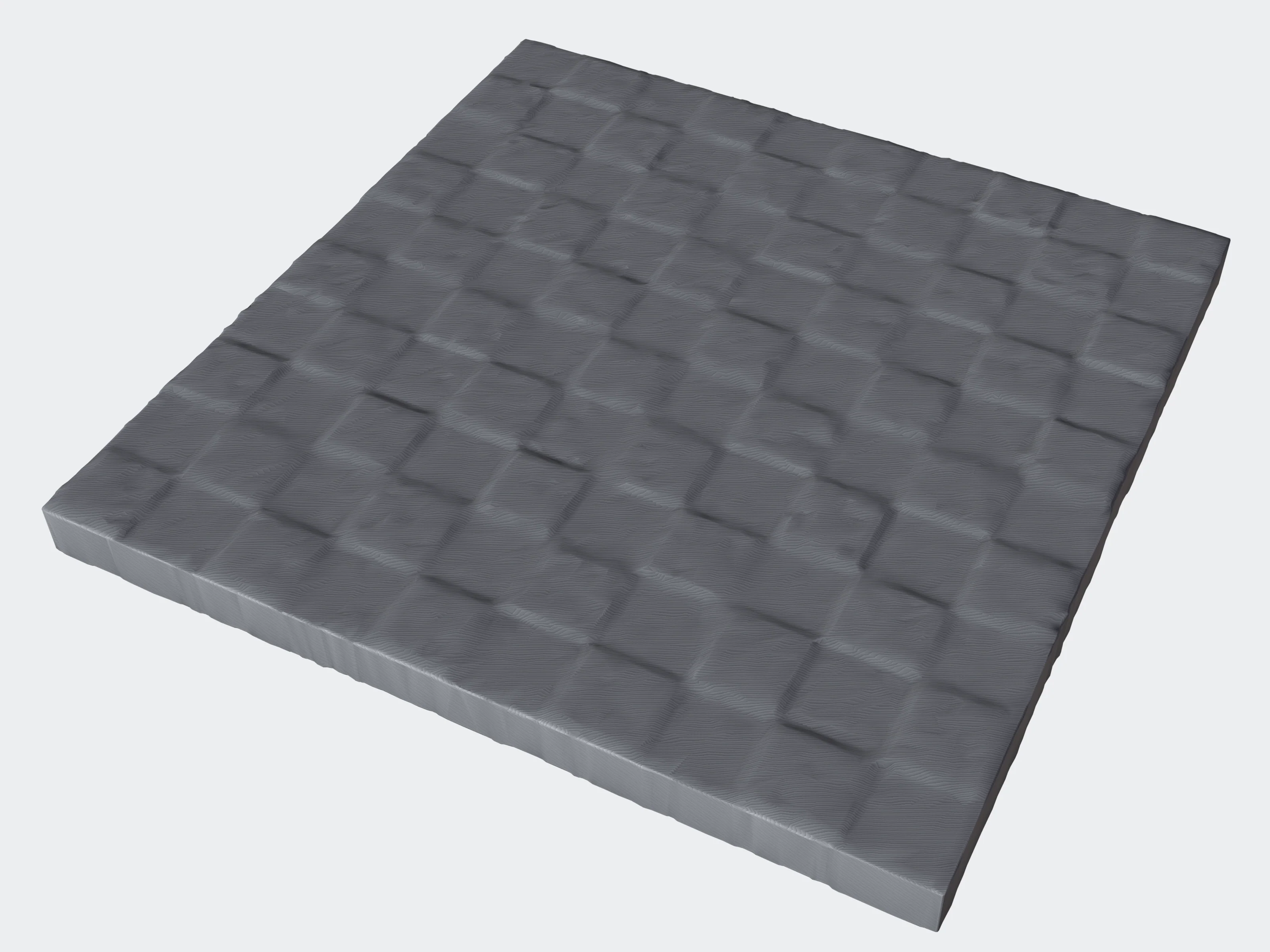 emboss
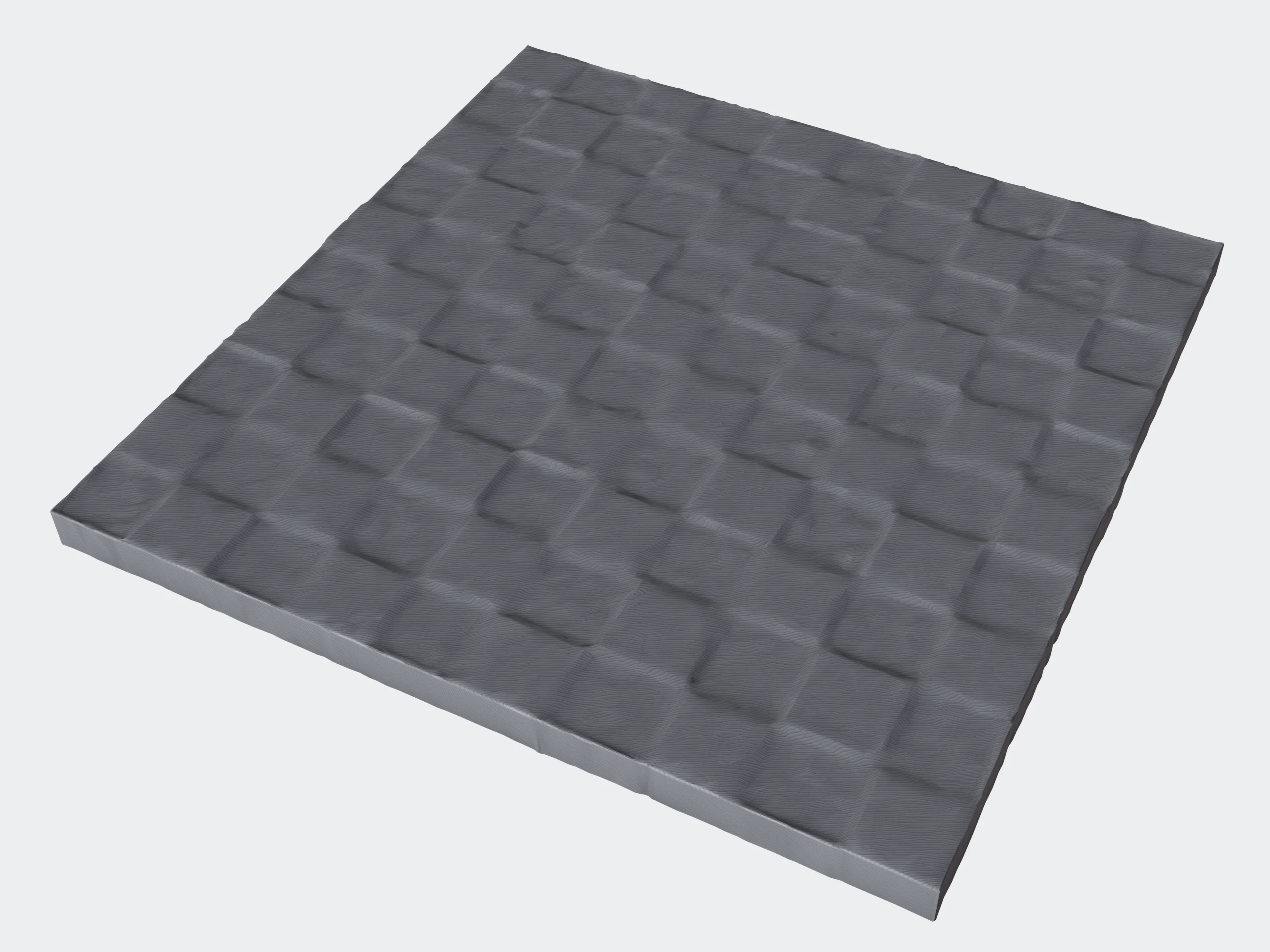 deboss
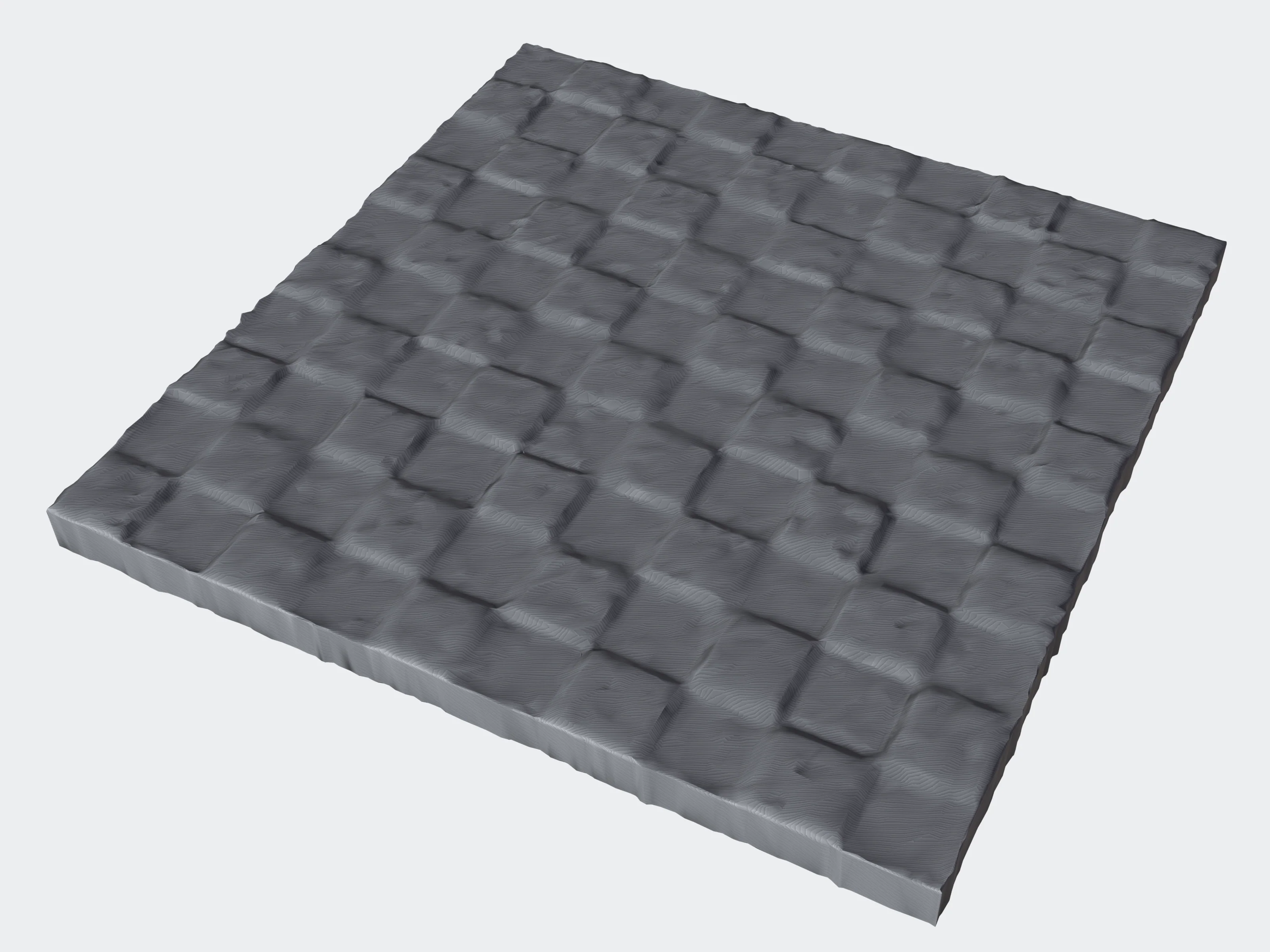 signed
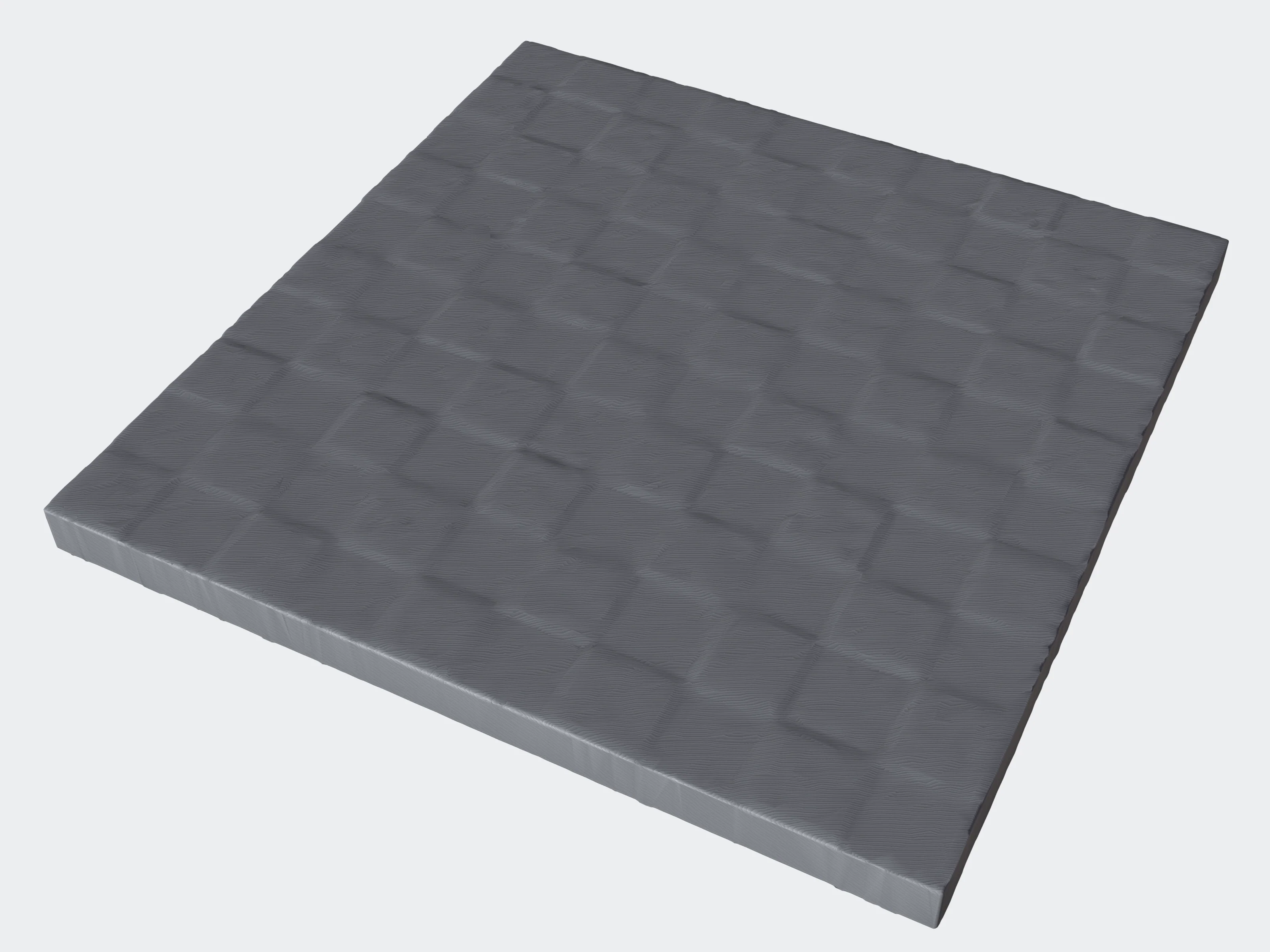 0.5 mm
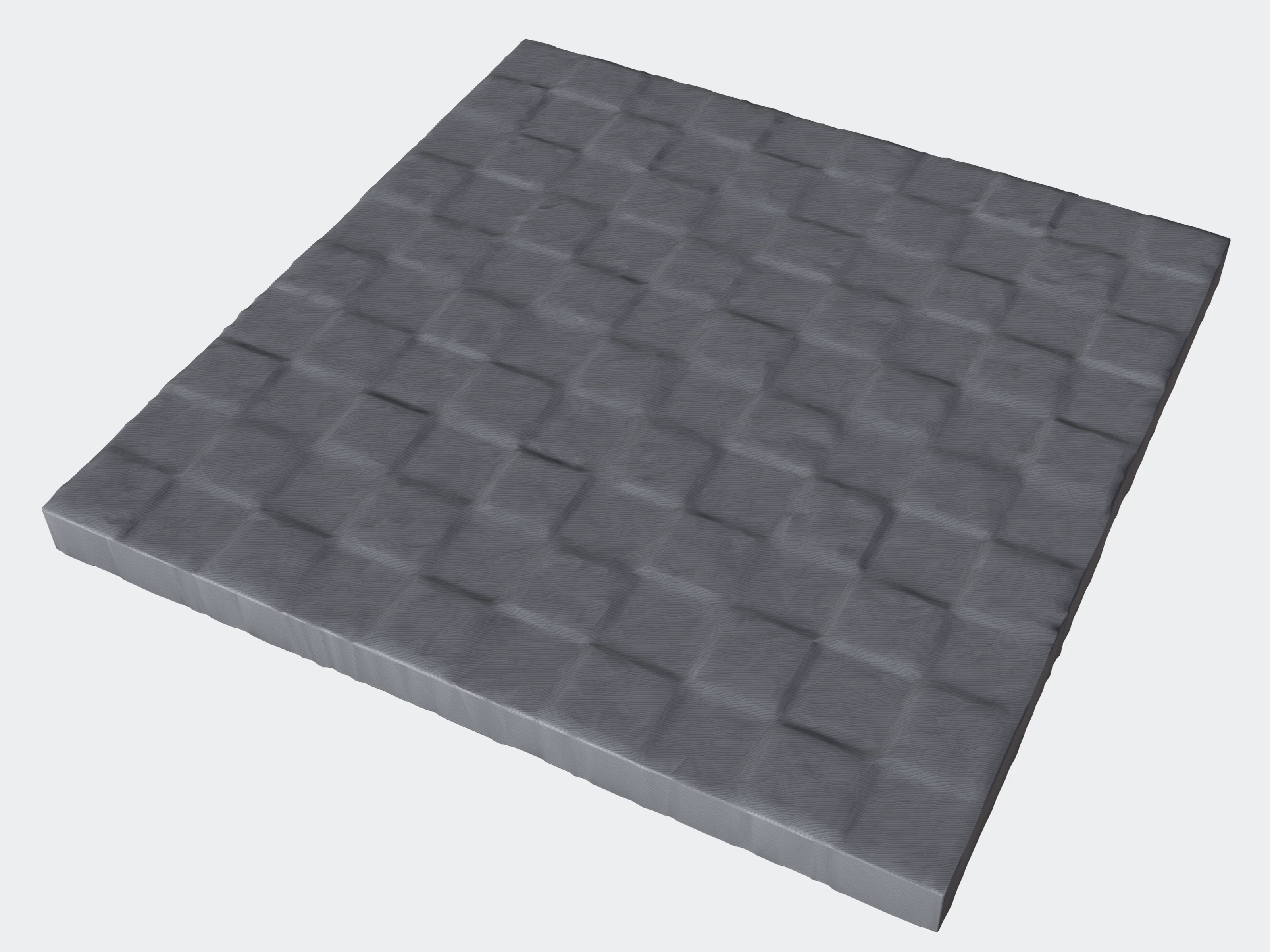 1 mm
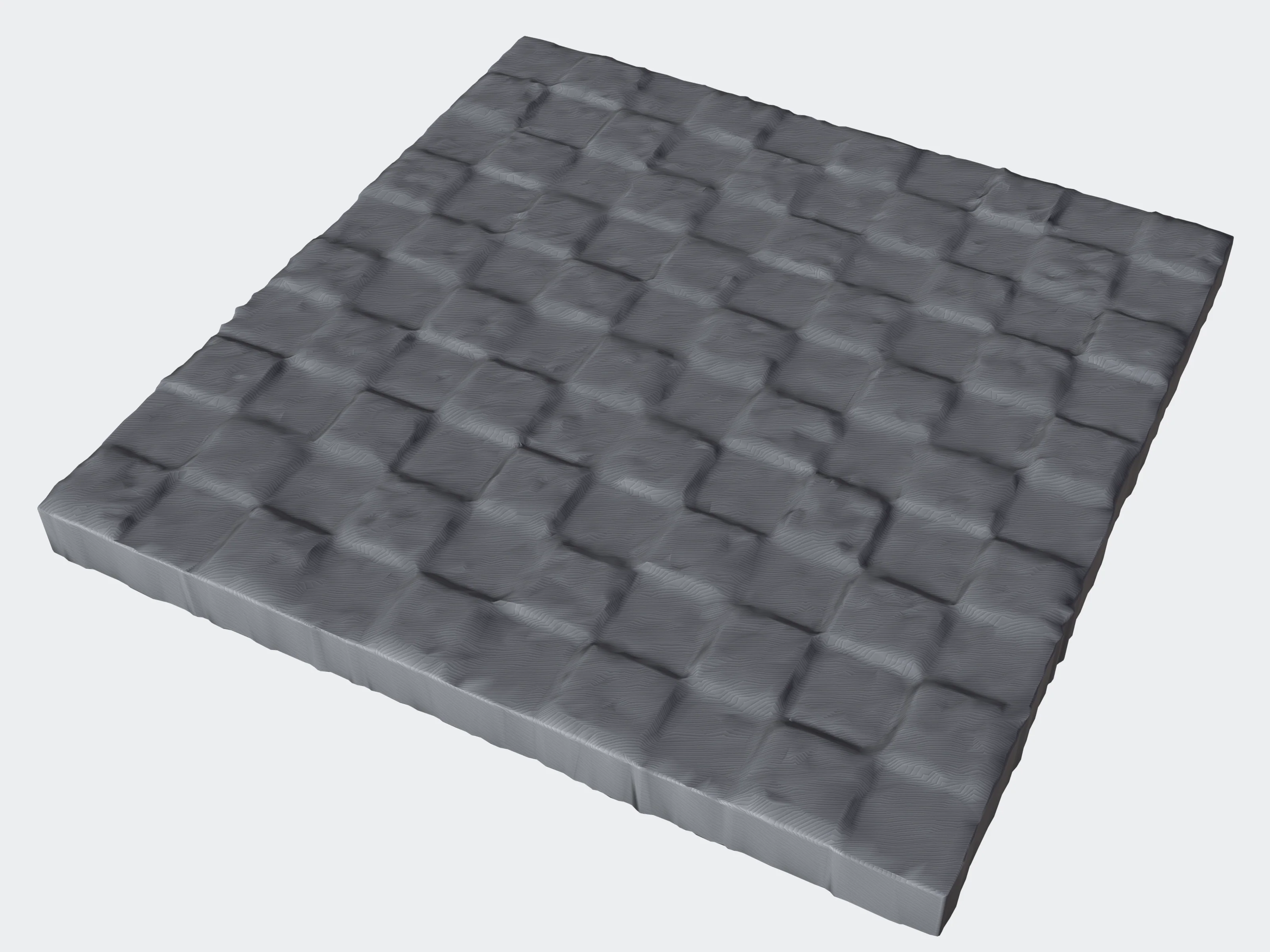 2 mm
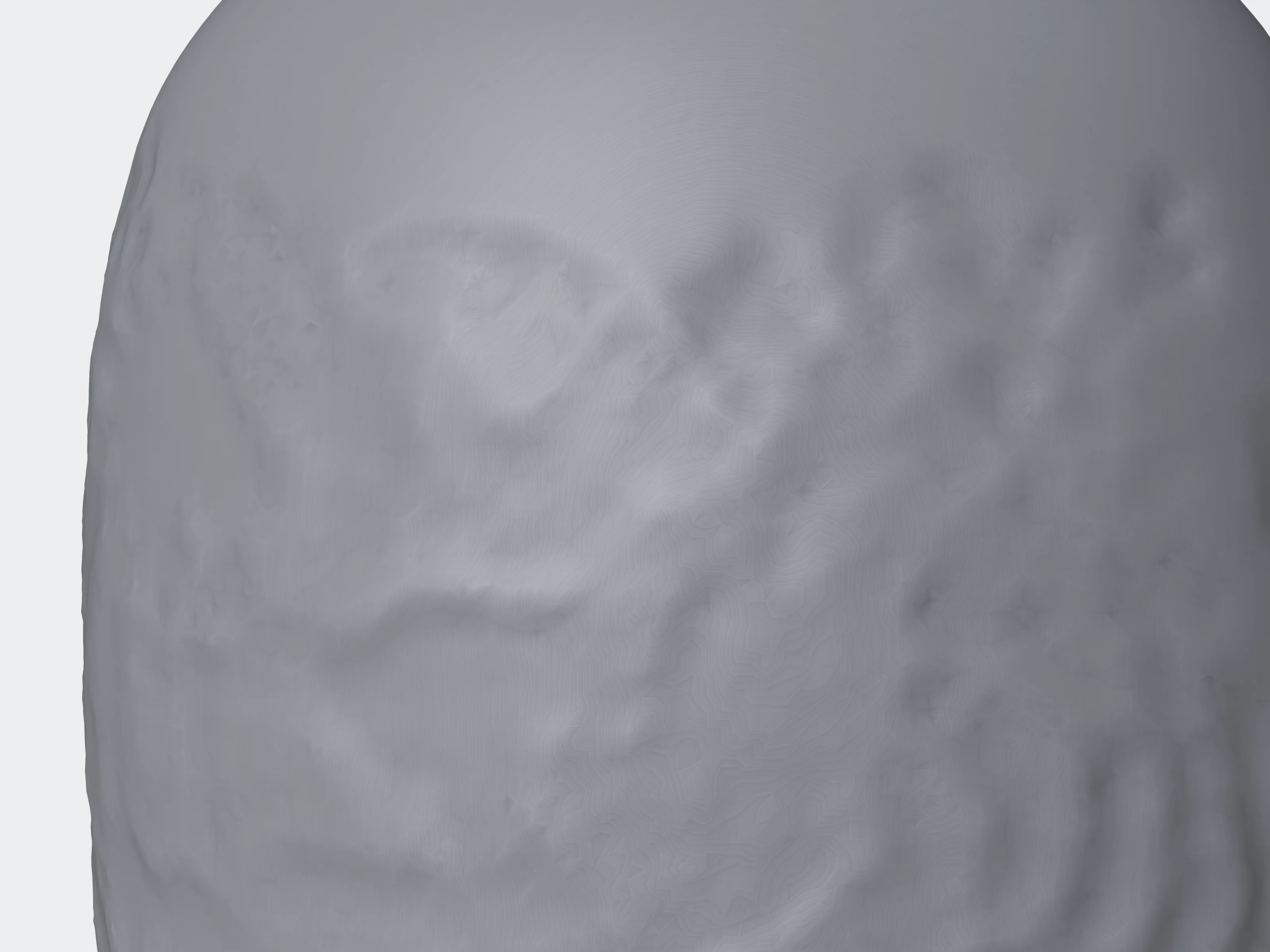 1.5
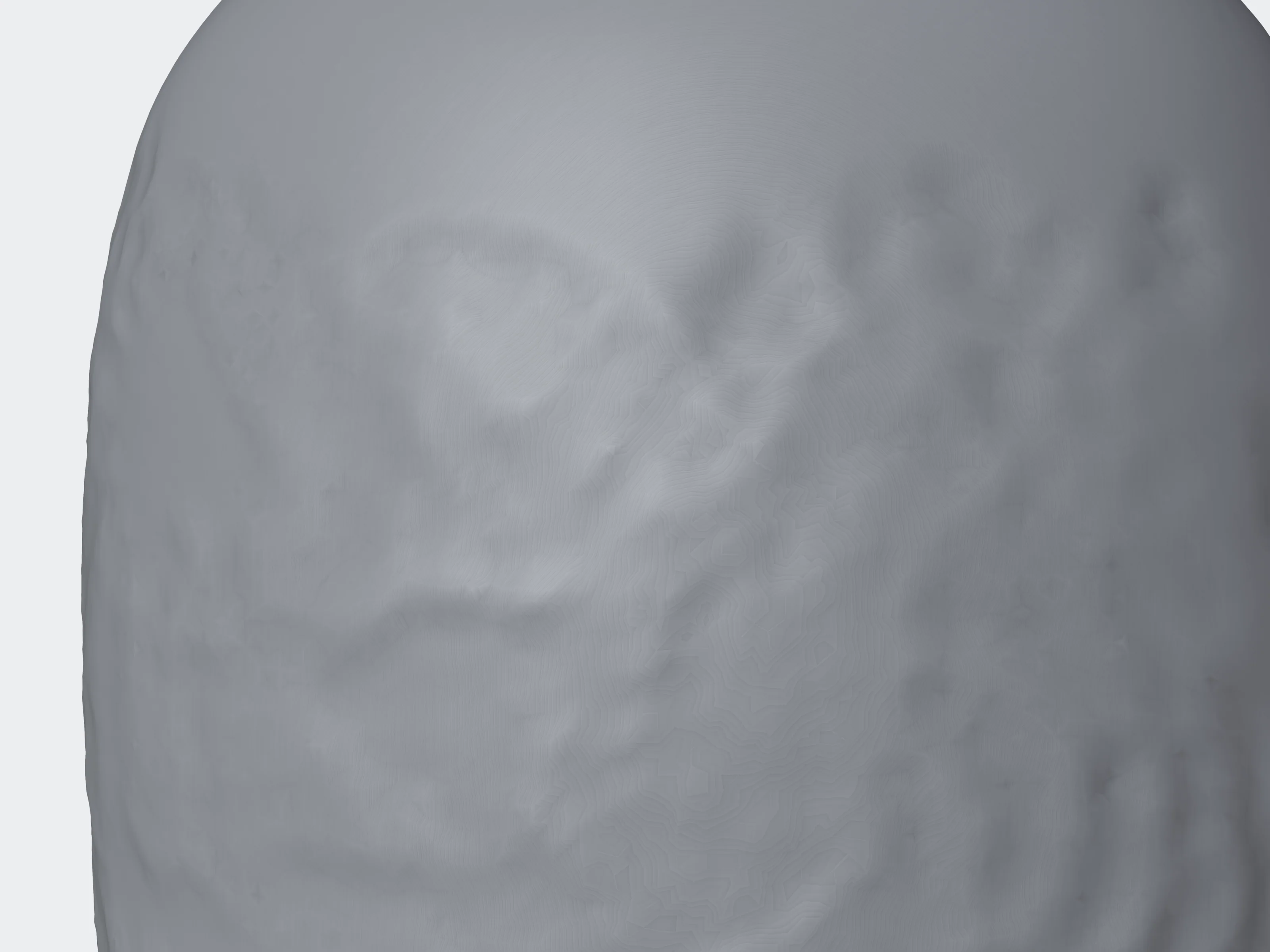 3
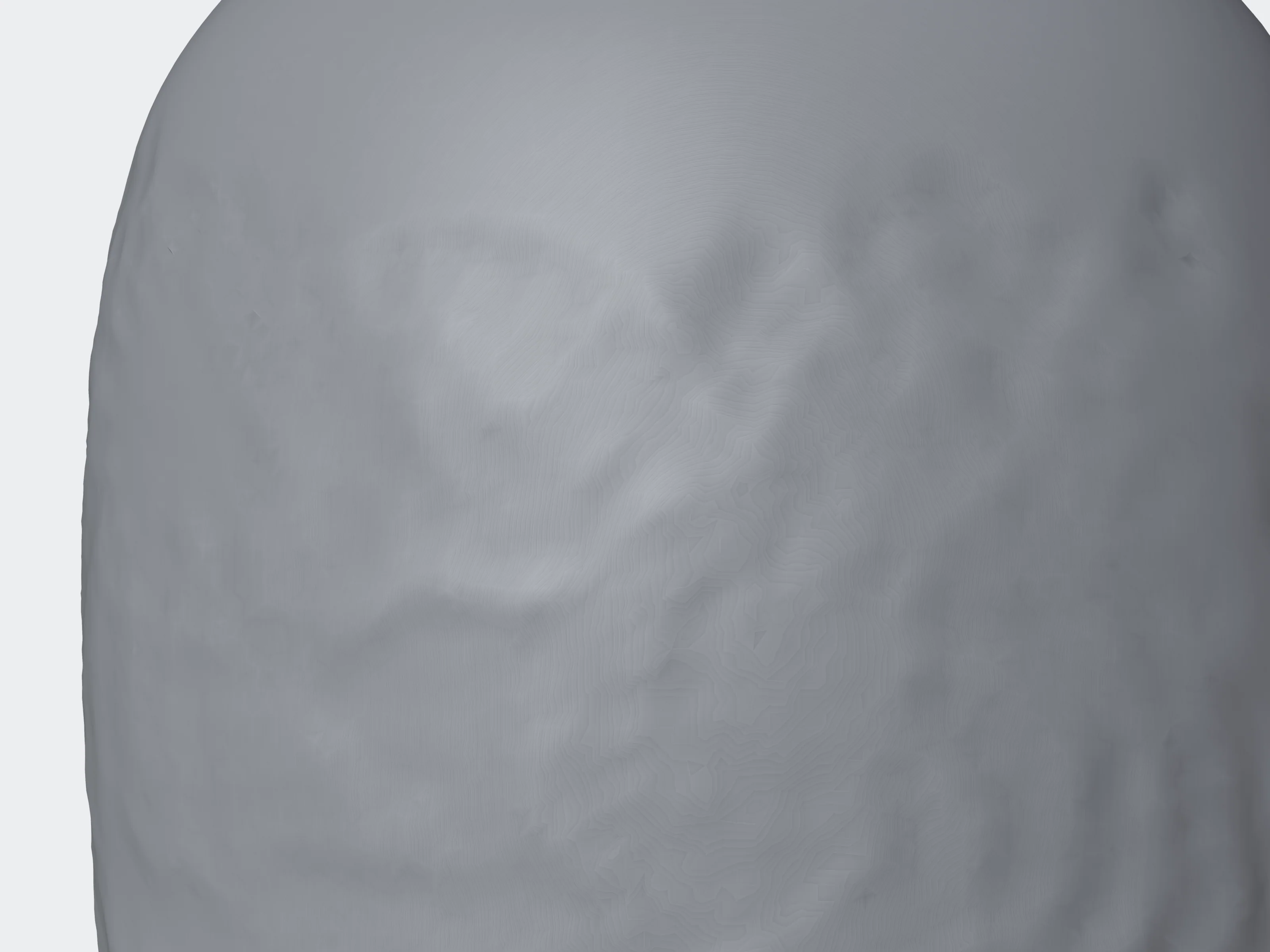 6